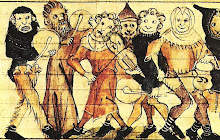
Countless clinical studies have now tied the secret of health to moving. There is also great health in being moved, something that produces similar physiology. Think about the old meanings buried in the eymology of "emotion." To move and feel are complements, and the emotion that a tune triggers is a tune-up in how to move more deeply through the wider world. Music makes us go somewhere. It propels us into new states, new vantages, new emotional affordances. If you ask a scientist why music is healthy, the answer will come in units of cortisol and heart rate and blood-oxygen levels. But if you ask this listener, I'd say that music is an off-line cognitive therapy. By making us sad in the absence of real tragedy, it leaves us more adept in sadness when life calls for the real thing.I can't recommend this book highly enough.
Monday, June 15, 2026
Richard Powers on the health of being moved
I was deeply moved by this paragraph in "The Parting Glass," Powers's contribution to Music and Mind, a 2024 collection of essays about music and health compiled and edited by Renée Fleming:


Thursday, June 11, 2026
New String Arrangements for 2026 Summer Strings
You can find links below to PDF files for these brand new (and road-tested) arrangements of pieces suitable for multi-level string ensembles to use for educational or recreational purposes.
If (a picture paints a thousand words)
Walking in the Air
Enchanted
March pour la Cérémonie des Turcs
Plaisir d’amour
The Lion Sleeps Tonight
Here Comes the Sun
Quand on s’promène au bord de l’eau
If I Were a Rich Man
If (a picture paints a thousand words)
Walking in the Air
Enchanted
March pour la Cérémonie des Turcs
Plaisir d’amour
The Lion Sleeps Tonight
Here Comes the Sun
Quand on s’promène au bord de l’eau
If I Were a Rich Man
Wednesday, June 10, 2026
Haydn vs. Mozart
I have spent weeks trying to figure out how best to finger and bow the first violin part of the D minor Mozart "Haydn" Quartet. After a lot of thought, and after a lot of practice, I have come up with some solutions that work for me. The piece has so many sudden changes in dynamics that require being in different parts of the bow for different outcomes.
When I play the piece tonight with my friends, I'm sure to learn that my choices might, hopefully only here and there, not have been the best.
But that's the thing: Mozart opens up possibilities with his music that require a great deal of creativity. Maybe that's why we keep trying to meet him halfway throughout our musical lives. So many of us return to the same pieces again and again, hoping to achieve cleaner articulation, longer and stronger phrases, and emotional understanding.
I can proudly speak from experience concerning Haydn because I have practiced and played (not performed, however) the first violin parts of all of his quartets. I have found that there is usually one clever technical solution that makes a challenging phrase flow naturally. As florid as his phrases look on the page, they are a graceful pleasure to play, once you figure out exactly how. And then I have found cases where a clever technical solution I have found in an opening movement makes its way through all four movements of a quartet. That always gives me a thrill.
Maybe Haydn wrote his quartets with the idea of providing a satisfying way for musicians to interact socially. There are deep (very deep) emotional periods, and there are serious contrapuntal challenges as well as modulations in and out of remote-seeming keys, but the balances always seem to have been worked out in the composition process. And the challenges in Haydn seem, at least to me, more like opportunities for interesting music making than the challenges in Mozart that address every musician's capacity in the ensemble for introspection and intensely dramatic personal musical expression.
. . . After playing last night I can report that most of my bowing choices did not work in context, and that it really didn't matter at all. A great time was had by all. What a fantastic piece of music!
When I play the piece tonight with my friends, I'm sure to learn that my choices might, hopefully only here and there, not have been the best.
But that's the thing: Mozart opens up possibilities with his music that require a great deal of creativity. Maybe that's why we keep trying to meet him halfway throughout our musical lives. So many of us return to the same pieces again and again, hoping to achieve cleaner articulation, longer and stronger phrases, and emotional understanding.
I can proudly speak from experience concerning Haydn because I have practiced and played (not performed, however) the first violin parts of all of his quartets. I have found that there is usually one clever technical solution that makes a challenging phrase flow naturally. As florid as his phrases look on the page, they are a graceful pleasure to play, once you figure out exactly how. And then I have found cases where a clever technical solution I have found in an opening movement makes its way through all four movements of a quartet. That always gives me a thrill.
Maybe Haydn wrote his quartets with the idea of providing a satisfying way for musicians to interact socially. There are deep (very deep) emotional periods, and there are serious contrapuntal challenges as well as modulations in and out of remote-seeming keys, but the balances always seem to have been worked out in the composition process. And the challenges in Haydn seem, at least to me, more like opportunities for interesting music making than the challenges in Mozart that address every musician's capacity in the ensemble for introspection and intensely dramatic personal musical expression.
. . . After playing last night I can report that most of my bowing choices did not work in context, and that it really didn't matter at all. A great time was had by all. What a fantastic piece of music!
Sunday, June 07, 2026
My Aunt Jeanne
I learned pretty much everything about the maternal side of the family from my aunt Jeanne, my mother's younger sister. Jeanne was born in 1940 in an apartment across the street from Jackson Park on the south side of Chicago. My grandparents spelled her name the typical way, but Jeanne preferred to spell it the way the French did. She idolized my mother, who was kind enough to include her in the various fanciful games she played with her sophisticated friends. Here she is as the character "it," the page turner. You can see the whole photo tableau here.
Jeanne went on to study English at the University of Illinois in Urbana, and became an actress, an English teacher, and a director of drama productions at Nicholas Senn High School (several of her students mention her as favorite teacher in this link). She also did some professional acting in Chicago.
She visited us often when was a child. Aunt Jeanne taught me all about astrology, and she taught me how to read Tarot cards. I learned important things from her about the early life of my mysterious mother, who rarely talked about her childhood. Jeanne and her first husband Frank once took me on a hike up Mount Greylock, the highest mountain in Massachusetts, and they let me do the hike barefoot. I was probably eleven or twelve, and felt so incredibly fortunate to have such a cool aunt.
Mysticism ruled Jeanne's life, as did the phases of the moon.
She was a dedicated Rosicrucian. I spent one of my winter vacations with her in Chicago, and she took me to her Egyptian-themed lodge, but I was only permitted to enter the lobby.
She took me out to dinner at fabulous restaurants, and brought me to meet my great aunt Lil, my grandmother's sister. Great aunt Lil gave me a Persian lamb coat and a suitcase full of vintage clothes from the 1940s. Lil and her husband Mike loved to gamble, and they spent much of the year in Las Vegas.
My aunt's half sister Janie was the same age as my mother. My grandfather had two families on the same Chicago block. Eventually my grandmother divorced him, and after my mother and Jeanne were grown up she married a nice guy and moved to Florida.
Janie, who was very beautiful, worked as a waitress at the original Playboy Club in Chicago. After art school she left Chicago to work as a cocktail waitress in Las Vegas. Janie's mother, who was named Jane, became close with my aunt Jeanne when she was an adult.
I remember Jane calling Jeanne while I was there to ask her what phase the moon was in.
Jeanne, Janie, and June (my mother) remained close, and as older women they would meet once a year in Las Vegas. Janie died first, and my mother died in 2016.
Jeanne's life came to an end around May 27th, 2026. It is believed that she had a heart attack at home. A friend went to check in on her, and must have called the police when she didn't answer the door or her phone.
She lived a very full and a very colorful life, and I like to think that it was full and colorful until the very end.
I am writing this post for my own sense of closure, but I am also writing it so that former students and people who knew Jeanne (over the past eighty-six years she has been known as Jean Blume, Jeanne Blume, Jeanne Reckitt, Jeanne Reckitt-Castillo, and Jeanne Castillo) can find something about her on line. She never used a computer, never had anything to do with social media, and never even had an email address.
I did tell her about posting that picture of her as "It," ten years ago, and she was OK with it. She was acting in her first part.

Jeanne went on to study English at the University of Illinois in Urbana, and became an actress, an English teacher, and a director of drama productions at Nicholas Senn High School (several of her students mention her as favorite teacher in this link). She also did some professional acting in Chicago.
She visited us often when was a child. Aunt Jeanne taught me all about astrology, and she taught me how to read Tarot cards. I learned important things from her about the early life of my mysterious mother, who rarely talked about her childhood. Jeanne and her first husband Frank once took me on a hike up Mount Greylock, the highest mountain in Massachusetts, and they let me do the hike barefoot. I was probably eleven or twelve, and felt so incredibly fortunate to have such a cool aunt.
Mysticism ruled Jeanne's life, as did the phases of the moon.
She was a dedicated Rosicrucian. I spent one of my winter vacations with her in Chicago, and she took me to her Egyptian-themed lodge, but I was only permitted to enter the lobby.
She took me out to dinner at fabulous restaurants, and brought me to meet my great aunt Lil, my grandmother's sister. Great aunt Lil gave me a Persian lamb coat and a suitcase full of vintage clothes from the 1940s. Lil and her husband Mike loved to gamble, and they spent much of the year in Las Vegas.
My aunt's half sister Janie was the same age as my mother. My grandfather had two families on the same Chicago block. Eventually my grandmother divorced him, and after my mother and Jeanne were grown up she married a nice guy and moved to Florida.
Janie, who was very beautiful, worked as a waitress at the original Playboy Club in Chicago. After art school she left Chicago to work as a cocktail waitress in Las Vegas. Janie's mother, who was named Jane, became close with my aunt Jeanne when she was an adult.
I remember Jane calling Jeanne while I was there to ask her what phase the moon was in.
Jeanne, Janie, and June (my mother) remained close, and as older women they would meet once a year in Las Vegas. Janie died first, and my mother died in 2016.
Jeanne's life came to an end around May 27th, 2026. It is believed that she had a heart attack at home. A friend went to check in on her, and must have called the police when she didn't answer the door or her phone.
She lived a very full and a very colorful life, and I like to think that it was full and colorful until the very end.
I am writing this post for my own sense of closure, but I am also writing it so that former students and people who knew Jeanne (over the past eighty-six years she has been known as Jean Blume, Jeanne Blume, Jeanne Reckitt, Jeanne Reckitt-Castillo, and Jeanne Castillo) can find something about her on line. She never used a computer, never had anything to do with social media, and never even had an email address.
I did tell her about posting that picture of her as "It," ten years ago, and she was OK with it. She was acting in her first part.
Saturday, June 06, 2026
Left and Right (with a heart between)

This procedure, which required a lot of preparation, was very successful. The stem cells that the hospital harvested were immediately frozen. On June 30th (my mother's birthday) they will be thawed and pumped into my body with instructions to grow bone marrow.
For the first day of the procedure my left arm had to stay completely still while my blood circulated through a centrafugal machine. I could move my right arm (which also had an IV) to do whatever needed to be done hand-wise. I had to pay attention to my left arm and hand, though: when the machine beeped, I had to squeeze a flexible textured ball (probably silicone, definitely green). The beeping indicated that blood was not flowing the way it was supposed to flow.
The second day my right arm was the one staying still and squeezing the ball when necessary, and I could only use my left hand for the things that hands do.
I also needed to monitor both hands (on both days) for signs of tingling, so that my calcium and citrus levels could be adjusted. It was hard work, and I was at it for eight hours each day.
I woke up at home (yay) this morning with an odd feeling of heightened sensory awarness, which I attributed to getting a full night's sleep, after enduring insomnia from two days of stimulating injections given in the evening, which instructed my bones to release stem cells into my bloodstream.
After breakfast Michael set to work on fixing a fan that was making noise. He removed and cleaned the cap of the screw mechanism that attaches the blades to the motor, but he was baffled when he couldn't get the cap to screw back on.
Without even thinking about it I screwed cap on counter-clockwise. (Needless to say, he was impressed.)
Then, when I sat down at the piano to play some Haydn, I noticed that I had a much quicker left/right response than I have ever had, and that my hands were working together in a brand new way.
It was as if some kind of plaque had been cleaned from whatever it is that connects my brain to my hands. I also noticed that I had a more direct connection between my ear and my hands than I have ever had before while playing the piano.
I'm not supposed to play violin until this evening (twenty-four hours after my release from the hospital) because it would require arm strength to hold up the instrument and use the bow.
I'm excited to see what happens then, but for now I think I need a little nap before taking a walk (before it rains).
Wednesday, May 27, 2026
Feeling, Disease, and Anxiety
I have been feeling exceptionally well for a couple of weeks. The treatments for my multiple myeloma have pushed the level of cancer in my system way down, and though I sometimes feel a little bit tired (particularly when I do not have the "assistance" of steroids), I have been feeling rather normal.
Hot flashes and night sweats have returned with regularity, but the intense need to drink great amounts of water all day and all night have subsided. I have the occasional age-appropriate ache and pain, which I had trouble noticing when I had intense pain caused by the (now dead) tumor on my sacrum, and my regular doses of steroids and other anti-cancer medications.
Now, with the exception of a daily aspirin and thrice-daily doses of a drug that protects me from getting shingles, it is just me in my body for the rest of May. Then I have to inject myself with human growth hormone to prepare for next week's festivities: the harvest of stem cells for my bone marrow transplant at the end of June.
After the "harvest" my major task is to show up at the hospital for a big dose of chemotherapy to wipe out my (still a wee bit cancerous) bone marrow, and then build up my immune system after my harvested (and I guess cleared of cancer) stem cells get poured back into my system.
During the past few days I have noticed a kind of free-flowing anxiety surging through my system: anxiety about being in the right place at the right time, anxiety about packing everything I need for my time in the hospital and my time near the hospital, anxiety about cleaning, and anxiety about recovery.
I have also noticed that when I practice music that allows me to release emotional energy, I feel better. During the past six months or so, since cancer-related circumstances started taking over my life, I went through a period of relative emotional numbness that I found was relived by music. When I was playing, I felt alive. The feeling lasted for a while after playing, as long as I was thinking about the music I had been playing.
I also noticed that I could become emotionally connected to prose passages, people, and circumstances in the books I was reading.
This (now pretty much under control since I have been able to talk about it) anxiety could be happening because my body is no longer in a constant combat mode. I now have the leisure to feel, which I like to think of as a good thing.
Practicing now seems to be a little bit different from the way it felt a few weeks ago. I can think about the "how" of making a phrase sound better with more objectivity, which is something that makes practicing more productive than simply playing because I need some emotional relief.
Knowing where to be in the bow, for example, is something I can only accomplish through focused practice. And when I am in the anxiety-informed state of performing, the practicing I have done allows me to enter a more free-flowing and expressive state than I would be in if I hadn't practiced properly.
Hot flashes and night sweats have returned with regularity, but the intense need to drink great amounts of water all day and all night have subsided. I have the occasional age-appropriate ache and pain, which I had trouble noticing when I had intense pain caused by the (now dead) tumor on my sacrum, and my regular doses of steroids and other anti-cancer medications.
Now, with the exception of a daily aspirin and thrice-daily doses of a drug that protects me from getting shingles, it is just me in my body for the rest of May. Then I have to inject myself with human growth hormone to prepare for next week's festivities: the harvest of stem cells for my bone marrow transplant at the end of June.
After the "harvest" my major task is to show up at the hospital for a big dose of chemotherapy to wipe out my (still a wee bit cancerous) bone marrow, and then build up my immune system after my harvested (and I guess cleared of cancer) stem cells get poured back into my system.
During the past few days I have noticed a kind of free-flowing anxiety surging through my system: anxiety about being in the right place at the right time, anxiety about packing everything I need for my time in the hospital and my time near the hospital, anxiety about cleaning, and anxiety about recovery.
I have also noticed that when I practice music that allows me to release emotional energy, I feel better. During the past six months or so, since cancer-related circumstances started taking over my life, I went through a period of relative emotional numbness that I found was relived by music. When I was playing, I felt alive. The feeling lasted for a while after playing, as long as I was thinking about the music I had been playing.
I also noticed that I could become emotionally connected to prose passages, people, and circumstances in the books I was reading.
This (now pretty much under control since I have been able to talk about it) anxiety could be happening because my body is no longer in a constant combat mode. I now have the leisure to feel, which I like to think of as a good thing.
Practicing now seems to be a little bit different from the way it felt a few weeks ago. I can think about the "how" of making a phrase sound better with more objectivity, which is something that makes practicing more productive than simply playing because I need some emotional relief.
Knowing where to be in the bow, for example, is something I can only accomplish through focused practice. And when I am in the anxiety-informed state of performing, the practicing I have done allows me to enter a more free-flowing and expressive state than I would be in if I hadn't practiced properly.
Tuesday, May 19, 2026
Creative Energy
I would say that in my sixty-seven years of life I have spent at least fifty years of it being filled with restless creative energy. Like most people, I spent the first decade and a half of it doing the work of growing and learning. I grew in social, mental, physical, and musical ways, and was fortunate to grow up in a place (Newton, Massachusetts), where I was stimulated by my friends and my teachers. I was also stimulated by adults in the musical community, and was fortunate (in some ways) to have had a great deal of freedom to explore my interests on my own.
In my young adulthood, which was riddled with and rattled by circumstances that were beyond my control, I became increasing restless. Even when life circumstances became safe and stable by marrying Michael and raising our (now grown-up) children, that restlessness found its way into my head in the form of creative energy that needed to be expressed.
Practicing and playing music wasn't enough. Learning a new instrument from "scratch" wasn't enough. But writing music was just the ticket. And doing it every day gave me a way of turning my restless energy into productive energy, and allowed me to write satisfying music that I found beautiful to share and to hear played.
Now that I have this cancer occuping my body and my mind, I have been filling my days with things to distract me from the reality of being sick. I practice violin and piano every day, and have found that I now have more technique on the piano and more control on the violin than I ever imagined I would have.
I can even sometimes play the piano fluently, and that makes me feel me feel stimulated and satisfied.
I do not, however, feel restless. And for the first time in decades I do not feel compelled develop musical ideas that might pop into my head into pieces of music. Maybe it is because I have written enough, or maybe there isn't room in my coping mechanism for the restlessness that kept me so full of creative musical energy for so many years.
After I recover from my upcoming (June 30th) bone marrow transplant, which will take some time, I wonder if the creative energy and restlessness that once fueled my writing will return. And if it does, I wonder how my new-found piano skills and deeper physical understanding of piano music might inform what comes out.
In my young adulthood, which was riddled with and rattled by circumstances that were beyond my control, I became increasing restless. Even when life circumstances became safe and stable by marrying Michael and raising our (now grown-up) children, that restlessness found its way into my head in the form of creative energy that needed to be expressed.
Practicing and playing music wasn't enough. Learning a new instrument from "scratch" wasn't enough. But writing music was just the ticket. And doing it every day gave me a way of turning my restless energy into productive energy, and allowed me to write satisfying music that I found beautiful to share and to hear played.
Now that I have this cancer occuping my body and my mind, I have been filling my days with things to distract me from the reality of being sick. I practice violin and piano every day, and have found that I now have more technique on the piano and more control on the violin than I ever imagined I would have.
I can even sometimes play the piano fluently, and that makes me feel me feel stimulated and satisfied.
I do not, however, feel restless. And for the first time in decades I do not feel compelled develop musical ideas that might pop into my head into pieces of music. Maybe it is because I have written enough, or maybe there isn't room in my coping mechanism for the restlessness that kept me so full of creative musical energy for so many years.
After I recover from my upcoming (June 30th) bone marrow transplant, which will take some time, I wonder if the creative energy and restlessness that once fueled my writing will return. And if it does, I wonder how my new-found piano skills and deeper physical understanding of piano music might inform what comes out.
Wednesday, May 13, 2026
Emmanuel Pahud
Last night Michael and I watched Lumière, Le Cinéma!, a 2024 film that stitches together several dozen fifty-second-long Lumière Brothers films from the late nineteenth century, covers the product with informative narration, and underscores it with music by Gabriel Fauré. Included in the underscore was the first part of the Fantasie for Flute and Piano. The performance was so beautiful, so deeply original, and so perfectly of the period (late nineteenth-century France), that I couldn't imagine it would have been anyone other than Emmanuel Pahud playing. I was correct. It was his recording with Eric Le Sage.
I first heard Emmanuel Pahud in 1995 when I was working as a CD reviewer for the American Record Guide. The recording was of sonatas by Carl Maria von Weber. The review was never published. Perhaps the recording label (Valois) was too small, or the editor didn't think it was important enough music to include in the magazine. In those pre-email days we used to send three-inch discs with reviews typed in Word Perfect in the mail to the magazine, and that was that. I did not keep a copy of my review.
The flute playing on the Weber recording was remarkable. Pahud had, even at the beginning of his career, found a path towards musical infinity with the flute. Though I aspired at one point to make my way in music through the flute, I knew that the flute wasn't the instrument that could take me where I wanted to go.
But what a joy it is to listen to Emmanuel Pahud play the flute.
Here's the Fauré:
I first heard Emmanuel Pahud in 1995 when I was working as a CD reviewer for the American Record Guide. The recording was of sonatas by Carl Maria von Weber. The review was never published. Perhaps the recording label (Valois) was too small, or the editor didn't think it was important enough music to include in the magazine. In those pre-email days we used to send three-inch discs with reviews typed in Word Perfect in the mail to the magazine, and that was that. I did not keep a copy of my review.
The flute playing on the Weber recording was remarkable. Pahud had, even at the beginning of his career, found a path towards musical infinity with the flute. Though I aspired at one point to make my way in music through the flute, I knew that the flute wasn't the instrument that could take me where I wanted to go.
But what a joy it is to listen to Emmanuel Pahud play the flute.
Here's the Fauré:
Thursday, April 30, 2026
Bonus Days
I do not believe in life after death, but, because of my recent intimacy with cancer, I have started to understand things quite differently than I had in life B.C. (or b.c.). I have come to think of everything that has happened in 2026 as a generous bonus.
If I hadn't had the opportunity to start treatment for this cancer in January, when the pain from the tumor on my sacrum was unbearable, I would very likely not be here to write this post. But science, insurance (Medicare), an enormous amount of support from my family (particularly Michael who helped me through the worst pain and the worst fears), a team of brilliant and dedicated doctors, extremely helpful and dedicated nurses, and my friends, have made it possible for me to experience extraordinary things during what I have come to understand are bonus days.
Come to think of it, every day is a bonus day.
Today I played a Bach prelude and part of a fugue on the piano, practiced some Brahms on the violin (I'm playing with a new pianist, and next Tuesday evening we're playing Brahms), practice some of the music I have written for violin and piano (this new pianist is interested in reading that too). It ain't Brahms, but what is except Brahms? I also played some Grieg on the piano, did some teaching, and talked with both of our kids and our grandchildren (who wished me a happy birthday today).
Michael and I read two chapters of Bleak House, mowed the lawn, and went out for dinner.
That I have a future is a gift.
That I can look forward to seeing our daughter and two granddaughters this weekend, and can look forward to the arrival (into the world) of another granddaughter next week is a gift.
That the treatment for this cancer has made it possible for me to walk every day, to practice every day, to read every day, to go to concerts and watch movies, to do work when necessary, and to do daily tasks (cooking, washing dishes, doing laundry, cleaning the house) is a gift.
If I hadn't had the opportunity to start treatment for this cancer in January, when the pain from the tumor on my sacrum was unbearable, I would very likely not be here to write this post. But science, insurance (Medicare), an enormous amount of support from my family (particularly Michael who helped me through the worst pain and the worst fears), a team of brilliant and dedicated doctors, extremely helpful and dedicated nurses, and my friends, have made it possible for me to experience extraordinary things during what I have come to understand are bonus days.
Come to think of it, every day is a bonus day.
Today I played a Bach prelude and part of a fugue on the piano, practiced some Brahms on the violin (I'm playing with a new pianist, and next Tuesday evening we're playing Brahms), practice some of the music I have written for violin and piano (this new pianist is interested in reading that too). It ain't Brahms, but what is except Brahms? I also played some Grieg on the piano, did some teaching, and talked with both of our kids and our grandchildren (who wished me a happy birthday today).
Michael and I read two chapters of Bleak House, mowed the lawn, and went out for dinner.
That I have a future is a gift.
That I can look forward to seeing our daughter and two granddaughters this weekend, and can look forward to the arrival (into the world) of another granddaughter next week is a gift.
That the treatment for this cancer has made it possible for me to walk every day, to practice every day, to read every day, to go to concerts and watch movies, to do work when necessary, and to do daily tasks (cooking, washing dishes, doing laundry, cleaning the house) is a gift.
Friday, April 24, 2026
Michael Tilson Thomas
Michael Tilson Thomas, who died yesterday at the age of eighty-one, will always be a young man to me.
I am grateful to Lisa Hirsch, who knew MTT well, for making a portal post with multiple obituaries and links.
I had the opportunity to sing in the children's scene at the end of an unstaged performance of Wozzeck in 1969 or 1970 at Tanglewood, and Michael Tilson Thomas was our conductor. He stood in front of us, and we felt safe. It is an odd thing to say when referring to that particular opera, but that is how I remember the experience. Before we were on stage everything was bloody and murderous. On stage we had this animated young man making sure we were singing together.
I got to sing with him again a few years later, when I was in the Tanglewood Festival Chorus. My mother was in the chorus, and somehow I was able sing in it too. I found the program for the first concert that I sang with the chorus, and Michael Tilson Thomas, who I already knew, was the conductor. I had no idea how unusual this program was for the Boston Symphony Orchestra to play.
 I do remember that Thomas always referred to the Canticum Sacrum as the "Canticum Geshundheit," and I could never figure out exactly why. Could the word "Geshundheit" which means health in German, be in the same "family" as a "Bless you" after a sneeze, since Sacrum means sacred?
This has bothered me for much of my life.
I am grateful to Lisa Hirsch, who knew MTT well, for making a portal post with multiple obituaries and links.
I had the opportunity to sing in the children's scene at the end of an unstaged performance of Wozzeck in 1969 or 1970 at Tanglewood, and Michael Tilson Thomas was our conductor. He stood in front of us, and we felt safe. It is an odd thing to say when referring to that particular opera, but that is how I remember the experience. Before we were on stage everything was bloody and murderous. On stage we had this animated young man making sure we were singing together.
I got to sing with him again a few years later, when I was in the Tanglewood Festival Chorus. My mother was in the chorus, and somehow I was able sing in it too. I found the program for the first concert that I sang with the chorus, and Michael Tilson Thomas, who I already knew, was the conductor. I had no idea how unusual this program was for the Boston Symphony Orchestra to play.


This has bothered me for much of my life.
Monday, April 20, 2026
My Arrangement of Price's "Adoration" to be Performed by the Vienna Philharmonic!
I just learned the other day that for their Sommernachtskonzert on June 19, 2026 the Vienna Philharmonic, under the direction of Lorenzo Viotti, has programmed my arrangement of Florence Price's "Adoration."
 I remember looking at the organ music (Price's original) for the first time in the winter of 2013, and being blown away by what I heard. I immediately made setting of it for violin and piano, and brought it to my friend John David Moore's house to play it through. We decided to include it on the concert we were planning for February 28, 2014.
The two of us were the only people who knew it as a piece for violin and piano. And that concert increased the number of "Adoration" cognoscenti by a few dozen.
I decided to make a string orchestra version of the piece for our local Summer Strings orchestra, and shared that arrangement, as well as the violin and piano arrangement in the IMSLP. You can find all of my arrangements of "Adoration" here, along with settings by me and by other arrangers. The number of musicians who enjoyed playing the piece increased exponentially. And the number of people who enjoyed listening increased exponentially as well.
During her lifetime Florence Price never got the kind of recognition she deserved for her exquisite work. The idea of the Vienna Philharmonic including a piece written by her on one of their concerts would, I am certain, have been something far beyond her wildest dreams.
And having an arrangement of mine being performed by the Vienna Philharmonic is nothing I could ever have imagined in my wildest dreams.
I feel so grateful that I have had the opportunity to develop the skills necessary to do Price's "Adoration" justice as a piece for string orchestra (as well as one for violin and orchestra), and I feel so grateful to the people who chose the music for this Vienna Philharmonic Sommernachtskonzert for putting the Price on the program.
Back in the very early 1980s, when I was studying recorder in Vienna, and playing flute and recorder on the Kärntner Straße in order to pay for rent and food, and hanging out at Jazz clubs with my friend Leo Wright, I never would have imagined being "present" in the city in this way. But here we are.

The two of us were the only people who knew it as a piece for violin and piano. And that concert increased the number of "Adoration" cognoscenti by a few dozen.
I decided to make a string orchestra version of the piece for our local Summer Strings orchestra, and shared that arrangement, as well as the violin and piano arrangement in the IMSLP. You can find all of my arrangements of "Adoration" here, along with settings by me and by other arrangers. The number of musicians who enjoyed playing the piece increased exponentially. And the number of people who enjoyed listening increased exponentially as well.
During her lifetime Florence Price never got the kind of recognition she deserved for her exquisite work. The idea of the Vienna Philharmonic including a piece written by her on one of their concerts would, I am certain, have been something far beyond her wildest dreams.
And having an arrangement of mine being performed by the Vienna Philharmonic is nothing I could ever have imagined in my wildest dreams.
I feel so grateful that I have had the opportunity to develop the skills necessary to do Price's "Adoration" justice as a piece for string orchestra (as well as one for violin and orchestra), and I feel so grateful to the people who chose the music for this Vienna Philharmonic Sommernachtskonzert for putting the Price on the program.
Back in the very early 1980s, when I was studying recorder in Vienna, and playing flute and recorder on the Kärntner Straße in order to pay for rent and food, and hanging out at Jazz clubs with my friend Leo Wright, I never would have imagined being "present" in the city in this way. But here we are.
Saturday, April 11, 2026
Matters Musical and Emotional
I heard a most interesting discussion on NPR the other day while driving to my weekly blood draw (treatment is going very well) about a crisis in mattering. Hearing this discussion at this particular point in my life (mid 60s, with a disease that has certainly caused me to think about life differently), was exactly what I needed.
Before the internet became the highway, street, road, window, and path to just about everything we do, both as musicians, and in extra-musical activities, my feelings of not mattering were personal family issues (a lot of typical middle child stuff in a wildly atypical family). Despite my issues growing up, I had friends, and I knew that I mattered to a lot of people.
Mattering and connection were, thank goodness, hard-wired into me through public school, my neighborhood, my musical life, writing letters, talking on the telephone, and even my various workplaces. Occasionally colleagues became friends, but even if we remained only cordial in our interactions, those relationships still mattered.
We didn't think so at the time, but raising children in a small town ended up being a real advantage in the mattering department. Even though they came of age with the internet (though it was primative and wired with annoying dial-up connections), they grew up with activities they enjoyed and a local paper. They also had to live and grow among people who had very different priorities from the priorities we had at home.
But they knew everyone, and everyone knew them. And they grew up knowing that they mattered. In their adult lives and in their lives as parents of young children they both seek out relationships that are meaningful.
Before the internet became the highway, street, road, window, and path to just about everything we do, both as musicians, and in extra-musical activities, my feelings of not mattering were personal family issues (a lot of typical middle child stuff in a wildly atypical family). Despite my issues growing up, I had friends, and I knew that I mattered to a lot of people.
Mattering and connection were, thank goodness, hard-wired into me through public school, my neighborhood, my musical life, writing letters, talking on the telephone, and even my various workplaces. Occasionally colleagues became friends, but even if we remained only cordial in our interactions, those relationships still mattered.
We didn't think so at the time, but raising children in a small town ended up being a real advantage in the mattering department. Even though they came of age with the internet (though it was primative and wired with annoying dial-up connections), they grew up with activities they enjoyed and a local paper. They also had to live and grow among people who had very different priorities from the priorities we had at home.
But they knew everyone, and everyone knew them. And they grew up knowing that they mattered. In their adult lives and in their lives as parents of young children they both seek out relationships that are meaningful.
Our son lives in the Boston area, which is where I grew up. I told him that I used to know all the cracks in the pavement in the Back Bay area of Boston, but then they changed the pavement. Aside from his young family and a few friends, I have very little connection with Boston. But I occasionally learn that musicians there play music that I have written and arranged. I need to remind myself that what I do and what I have done matters, even if I hear about it in indirect ways. It is so easy for me to forget that what I have done (and what I do) musically does matter.
I think the music I write as a medium through which musicians who play together can feel that they matter to one another. I try to make my music as comfortable as possible to play or sing, so that people are free to express themselves.
After a period of withdrawal from active professional musical life because of the unpredictability of the array of chemo drugs I am taking (since the beginning of 2026), I am doing my best to start stepping out a bit and am making connections with more local musicians. It feels like a healthy way to move forward.
I am also using this time to take a break from composing. I am spending all my musical energy practicing violin and playing piano. After playing at the piano for the past decade or two, I can finally play the instrument more freely, and without tension. I have no desire to develop the kind of technique that would make me sound like a real pianist, and do not care at all about playing at any tempo faster than molto moderato, so I do not practice scales or etudes. I just play music.
I think the music I write as a medium through which musicians who play together can feel that they matter to one another. I try to make my music as comfortable as possible to play or sing, so that people are free to express themselves.
After a period of withdrawal from active professional musical life because of the unpredictability of the array of chemo drugs I am taking (since the beginning of 2026), I am doing my best to start stepping out a bit and am making connections with more local musicians. It feels like a healthy way to move forward.
I am also using this time to take a break from composing. I am spending all my musical energy practicing violin and playing piano. After playing at the piano for the past decade or two, I can finally play the instrument more freely, and without tension. I have no desire to develop the kind of technique that would make me sound like a real pianist, and do not care at all about playing at any tempo faster than molto moderato, so I do not practice scales or etudes. I just play music.
Violin is a different story. My goal with the violin is to be able to play everything at tempo, in tune, with clean articuation, and with the greatest possible sense of phrasing and nuance. It makes for a nice life balance. Good cop, bad cop, I guess.
I am learning a great deal about writing music from Bach, Handel, Haydn, Mozart, Beethoven, and Brahms these days. They are my best teachers. I am excited to see what comes out on paper when it is time for me to write something new (or when someone asks me to write something new, whichever comes first).
Friday, March 27, 2026
Ambition
I was an ambitious teenager. I was also a very hard worker. As a high school flutist I used to set my alarm for 5:00 a.m. and practice scales for an hour in the basement. Then I would have breakfast and get on the 7:10 school bus.
I would use my free periods in school to practice (we had two practice rooms in the music office). I must have spent some after school time doing schoolwork, and I must have spent time with friends (playing duets, no doubt). After dinner I would often get on the trolley and go to concerts at the New England Conservatory or Boston University. Then I would practice until 11:00, listen to a record (usually a piece of Brahms chamber music), and would go to sleep immediately after the tone arm on my record player returned to its resting place, which turned the whole machine off.
I never let more than six hours of time pass between practice sessions. And I listened to a lot of Brahms chamber music.
My ambition got me into Juilliard. My ambition found me friends who worked as diligently and consistently as I did. My ambition made me fearless in the presence of the accomplished musicians I met in Europe, particularly people who specialized in early music, and it made me unafraid to work in radio, as a reviewer, and even as a kind of a scholar, even though I had absolutely no training in musical scholarship.
But it wasn’t ambition that fueled my return to playing violin in my early thirties, after nearly twenty years away. It was pure need. I had run into an expressive wall, and needed to find a way to move forward.
I needed to be able to play a stringed instrument so that I could play the kind of chamber music that was never available to me as a flutist. I needed Schumann in my life, and Brahms, and Beethoven beyond the Serenade.
I knew that at my age there was no path to the kind of a career I imagined I would have as a flutist. I was quite demoralized after every path to “success” (or even employment) as a flutist came to an abrupt and bitter end, but I achieved competence as a string player rather quickly, and found that I had a knack for making string quartet arrangements.
Arranging gave me the courage to write my own music, and I found my old ambition returning. I started studying composition, and then essentially chain wrote piece after piece. I loved the hard work. I loved the rhythm of getting up very early and writing. I loved the thrill of hearing something I wrote played or sung beautifully. I particularly loved having the opportunity to express myself without the need to be judged by others. I have always been my fiercest critic, and organizing the notes and rhythms of a piece successfully is always gratifying.
I fell into the “class” of a “woman composer,” whether I thought of myself as one (different, in some way than a “man composer,” I suppose?) or not, and found that I was treated less seriously than my peers, regardless of the quality of my work. I had to fight simply to be taken seriously.
But then I found a few people who did take me and my work seriously. And then there were more.
I have a body of work that I am proud of. I know what I can do, and I know what my limitations are. I have never measured success in monetary terms; I measure it in terms of the usefulness of what I have written.
I could use monetized social media to property promote my work, but I have no ambition to do so. If somebody wants a piece of music, they know where to find it. I don’t want to adjust my biography to make myself worthy of someone’s attention. I prefer to let my work speak for itself.
I want to be able to play more difficult music on the piano, and I want to (finally) get a chance to play the Brahms piano quintets (all of them), on either violin or viola. Maybe I will write something new. Or not.
But I am calling on all my experience with ambition to make it through my cancer treatment, which continues through the end of July. And then it is only a few months until November, when the fate of the world has a chance of moving towards something resembling sanity.
Monday, March 23, 2026
Haydn String Quartet Project
My quartet friends and I have, over the past decade, made our way through all of Haydn's sixty-seven numbered string quartets in order, including the "spurious" quartets that were once attributed to him. And on Easter Sunday we are going to play (can you believe it?) the Seven Last Words. After that we will begin playing the Mozart "Haydn" Quartets, a truly delicious next place to go.
I noticed something yesterday while playing Opus 77 no. 2 in F major: the opening theme in the first violin part brings to mind the opening unison motive of Beethoven's F major String Quartet, Opus 18, no. 1. The opening of the Beethoven feels (at least to me) like a modernized and condensed answer to Haydn's graceful and gentile opening.
In 1798 and 1799 Prince Lobkowitz (of Vienna) commissioned both Haydn and Beethoven to each write a set of six string quartets, so both composers were at work: one at the end of his career, and one at the beginning of his career.
If you were to just look at the publication information it wouldn't seem possible that Beethoven, under ordinary circumstances, could have known what turned out to be Haydn's last complete string quartet. Haydn's Quartet Opus 77 no. 2 wasn't published until 1802, while the six quartets of Beethoven's Opus 18 were published in 1801. But Vienna was a small town, musically speaking, and the composers shared a patron. It wouldn't be beyond anyone's imagination that Beethoven might have had chance to see, through the good graces of the Prince, the manuscript score of what he believed would have been Haydn's last quartet long before it was published.
The F major Quartet was not the first of the Opus 18 quartets that Beethoven wrote; it was the second. Maybe he put it first in the publication so that his bold opening related-but-opposite F-major opening gesture to that of Haydn could more effectively and more immediately introduce his modernized approach to the string quartet.
 After playing Opus 77 no. 2 we played Haydn's very last quartet, published as Opus 103. The final movement, which Haydn calls a Canon, is a puzzle to me because there is no way that it can be "canonized." Haydn, one of the greatest masters of the musical endgame, presents the end of his body of work for string quartet without making it come to a cadence. Wow.
 The fragement Haydn uses of "Der Gries," a poem by Johann Wilhelm Ludwig Gleim that he set for SATB choir, soloists, and keyboard as Hob. XXVc:5, ends with a semicolon in its original form:
I noticed something yesterday while playing Opus 77 no. 2 in F major: the opening theme in the first violin part brings to mind the opening unison motive of Beethoven's F major String Quartet, Opus 18, no. 1. The opening of the Beethoven feels (at least to me) like a modernized and condensed answer to Haydn's graceful and gentile opening.
In 1798 and 1799 Prince Lobkowitz (of Vienna) commissioned both Haydn and Beethoven to each write a set of six string quartets, so both composers were at work: one at the end of his career, and one at the beginning of his career.
If you were to just look at the publication information it wouldn't seem possible that Beethoven, under ordinary circumstances, could have known what turned out to be Haydn's last complete string quartet. Haydn's Quartet Opus 77 no. 2 wasn't published until 1802, while the six quartets of Beethoven's Opus 18 were published in 1801. But Vienna was a small town, musically speaking, and the composers shared a patron. It wouldn't be beyond anyone's imagination that Beethoven might have had chance to see, through the good graces of the Prince, the manuscript score of what he believed would have been Haydn's last quartet long before it was published.
The F major Quartet was not the first of the Opus 18 quartets that Beethoven wrote; it was the second. Maybe he put it first in the publication so that his bold opening related-but-opposite F-major opening gesture to that of Haydn could more effectively and more immediately introduce his modernized approach to the string quartet.


Hin ist alle meine Kraft!
Alt und schwach bin ich;
Wenig nur erquicket mich
Scherz und Rebensaft!
Hin ist alle meine Zier!
Meiner Wangen Roth
Ist hinweggeflohn! Der Tod
Klopft an meine Thür!
Unerschreckt mach' ich ihm auf;
Himmel, habe Dank:
Ein harmonischer Gesang
War mein Lebenslauf!
Saturday, March 21, 2026
Mimi on the First Day of Spring
Michael and I watched La Bohème on PBS last night. It was a performance recorded live on November 8 of 2025, and it is being broadcast for the first time now.
In light of an actor's comments (I have refrained from mentioning his name in previous posts, and will continue to do so) regarding the cultural validity of opera, I can't think of a better rebuttal to him and those who share his views than this performance of La Bohème (the link takes you to a place where you can watch it).
I have always loved the opera, but my experience with it has been either from an orchestra pit (where I couldn't see the stage), through reading a piano-vocal score with a translation, listening to recordings following the libretto, or watching select staged separate scenes. This was a first time for me to experience whole opera without any kind of distraction.
I loved being able to see such an excellent-in-every-way performance in my living room, with my husband (who was also seeing the opera for the first time), a full box of tissues, and an extra handkerchief. And as a full-blown adult I found that I brought much of what I have learned (through literature, music, and studying history) into the experience. I hear so much more after living an inner-voice string-player's life, and through writing music myself that I can marvel on a whole new level at how magical Puccini's orchestration and vocal writing is.
In this opera you get the greatest contrasts imaginable: the most intimate moments of deep emotional communication between lovers, two monologues that pass seamlessly into a duet, and an aria that a basso sings to his coat, presented here with tasteful serious devotion (my attention was drawn to the bassoon doubling, which might suggest to some directors and conductors a sense of the absurd). This was a believable love song, sung by an extraordinary basso. And then there are the raucous songs, dances, and banter that are more like vaudeville acts than what anyone would expect from a serious opera about love and death.
In contrast to the intimacy between Mimi and Rodolfo, where they seem to be the only two people on the earth, illuminated only by moonlight, Marcello and Musetta's on-stage relationship is never private. But Musetta's transformation from a person of ill repute into a truly great human being is front and center. Maybe the public Musetta was always different from the private Musetta (we will never know). She had to make a living, right? In my mind Marcello's only saving grace is that he can't help loving her.
The second act crowd scene in this production, which contrasts the intimate ending of the first act, is a marvel in every way. The stage is filled with people, action, props, storefronts, tables, animals, and a marching band of children snaking their way through a two-level crowd. There is extraordinary choral singing, and real dancers doing work that requires real skill: appearing to be clumsy, moving gracefully in an animal costume, and lifting people.
The lack of human rights, the ability of one person to get away with owning another person and disposing of that person when s/he is no longer of value that was still going strong during the middle of the ninetenth century suddenly doesn't feel like it was very long ago. As they say, "What happened once upon a time happens all of the time."
Here's the link to the opera again. Remember, it isn't available after April 4th.
In light of an actor's comments (I have refrained from mentioning his name in previous posts, and will continue to do so) regarding the cultural validity of opera, I can't think of a better rebuttal to him and those who share his views than this performance of La Bohème (the link takes you to a place where you can watch it).
I have always loved the opera, but my experience with it has been either from an orchestra pit (where I couldn't see the stage), through reading a piano-vocal score with a translation, listening to recordings following the libretto, or watching select staged separate scenes. This was a first time for me to experience whole opera without any kind of distraction.
I loved being able to see such an excellent-in-every-way performance in my living room, with my husband (who was also seeing the opera for the first time), a full box of tissues, and an extra handkerchief. And as a full-blown adult I found that I brought much of what I have learned (through literature, music, and studying history) into the experience. I hear so much more after living an inner-voice string-player's life, and through writing music myself that I can marvel on a whole new level at how magical Puccini's orchestration and vocal writing is.
In this opera you get the greatest contrasts imaginable: the most intimate moments of deep emotional communication between lovers, two monologues that pass seamlessly into a duet, and an aria that a basso sings to his coat, presented here with tasteful serious devotion (my attention was drawn to the bassoon doubling, which might suggest to some directors and conductors a sense of the absurd). This was a believable love song, sung by an extraordinary basso. And then there are the raucous songs, dances, and banter that are more like vaudeville acts than what anyone would expect from a serious opera about love and death.
In contrast to the intimacy between Mimi and Rodolfo, where they seem to be the only two people on the earth, illuminated only by moonlight, Marcello and Musetta's on-stage relationship is never private. But Musetta's transformation from a person of ill repute into a truly great human being is front and center. Maybe the public Musetta was always different from the private Musetta (we will never know). She had to make a living, right? In my mind Marcello's only saving grace is that he can't help loving her.
The second act crowd scene in this production, which contrasts the intimate ending of the first act, is a marvel in every way. The stage is filled with people, action, props, storefronts, tables, animals, and a marching band of children snaking their way through a two-level crowd. There is extraordinary choral singing, and real dancers doing work that requires real skill: appearing to be clumsy, moving gracefully in an animal costume, and lifting people.
In 1830s Paris (and for a long time before that) a woman without inherited wealth (property, that is, on which she would "earn" a certain amount of money on from rent) had to rely on men to care of her needs. She had very few ways to keep herself alive, unless she was a clever monster like Balzac's Cousin Bette.
And if a woman inherited a great deal of wealth, she couldn't have access to it unless she was married. Consider the case of Winneretta Singer (the Princesse de Polignac), who had a marriage of convenience with the titled-but-poor Prince de Polignac (both were gay), and used her wealth to promote musicians and commission music from composers. She even got a title, and the freedom that having vast amounts of money offers to live life on her terms. Most women didn't have her good fortune.
Beauty, if you had it, served as currency for women. Mimi and Musetta were/are two such women. In this opera they exist in a sea of male characters who present a buffet of negative male characteristics: self absorption, cluelessness regarding women and regarding relationships, jealousy, helplessness, and sentimentality that tell us a lot about the human condition in 1830s Paris. We can recognize these less-than-desirable male characteristics in the rich and powerful leaders of industry, government, and communications that elbow their way to our televisions while we wait for a portion of the news, a video, or a movie to begin.
We watch the cultural powers that be do their best to supress the rights that women (half the world's population) have worked for centuries to achieve and still struggle to maintain. Mimi asking Rodolfo whether she is still pretty just as she is about to die really drives the above point in the previous paragraph home for me.
Michael, who hadn't slept well the night before, was afraid that he might nod out during the opera. That didn't happen. Giocomo Puccini, Franco Zeffirelli (the director of the production), the fabulous cast, the astounding set designers and builders, and the conductor Keri-Lynn Wilson didn't let it happen. If anything the absolute balance between emotional intensity and comic relief made watching an energizing and refreshing cathartic experience. There's nothing like a series of good cries to bring your feelings to the surface. All your feelings.
Experiencing the world through feeling and connection is what makes us human. Becoming reacquainted with those feelings through an opera like La Bohéme (i.e. Puccini's operas in general), reconnects each of us with our humanity.
That is why I know that I need to spend more time with the operas that I love. Fortunately there are a great many operas available through the PBS App that we have on our television (because we support PBS). And we have a great collection of DVDs both at home and at the local University library.
I cried real tears when Rodolfo cried in response to a selfless gesture of kindness from Musetta. And when Mimi died (it isn't a spoiler that she dies at the end), I cried for her and for her friends. But I also cried for what I fear: the end to funding from the federal government for musical organizations like the Metropolitan Opera, which cannot sustain itself on money from supporters alone (including corporate sponsors), that accessible ultra-high quality performances like this one might not be able to happen anymore.
Michael, who hadn't slept well the night before, was afraid that he might nod out during the opera. That didn't happen. Giocomo Puccini, Franco Zeffirelli (the director of the production), the fabulous cast, the astounding set designers and builders, and the conductor Keri-Lynn Wilson didn't let it happen. If anything the absolute balance between emotional intensity and comic relief made watching an energizing and refreshing cathartic experience. There's nothing like a series of good cries to bring your feelings to the surface. All your feelings.
Experiencing the world through feeling and connection is what makes us human. Becoming reacquainted with those feelings through an opera like La Bohéme (i.e. Puccini's operas in general), reconnects each of us with our humanity.
That is why I know that I need to spend more time with the operas that I love. Fortunately there are a great many operas available through the PBS App that we have on our television (because we support PBS). And we have a great collection of DVDs both at home and at the local University library.
I cried real tears when Rodolfo cried in response to a selfless gesture of kindness from Musetta. And when Mimi died (it isn't a spoiler that she dies at the end), I cried for her and for her friends. But I also cried for what I fear: the end to funding from the federal government for musical organizations like the Metropolitan Opera, which cannot sustain itself on money from supporters alone (including corporate sponsors), that accessible ultra-high quality performances like this one might not be able to happen anymore.
Mimi, who is music personafied, comes to the end of her life too soon because she hid the fact that she was sick (except she shared it with us, the audience), and wasn't able to get medical care (which may not have been able to save her). Paris in the 1830s suffered from food shortabes, food shortages, cost of living increases, and widespread cholera, that, in the spring of 1832 killed 100,000 people all over France (18,402 in Paris).
There were, of course, many people who died because of lousy medical care.
The real possibility of performances at this extraordinary level fading into memory comes because of a government that will not use its vast resources to fund arts institutions and make performances of operas affordable both for the audiences and for the people putting on the productions. Instead they threaten universities, systematically silence broadcasting companies, and flood disinformation, propaganda, gold coins, and ever-changing views of reality through preferred pipelines. I think of the squandered money that could have gone to so many organizations that have been dedicated to improving the lives of people in America, Many organizations have, until recently, kept the country from descending into something like the documented chaos that Paris (and Europe in general) experienced in the 1830s.
The real possibility of performances at this extraordinary level fading into memory comes because of a government that will not use its vast resources to fund arts institutions and make performances of operas affordable both for the audiences and for the people putting on the productions. Instead they threaten universities, systematically silence broadcasting companies, and flood disinformation, propaganda, gold coins, and ever-changing views of reality through preferred pipelines. I think of the squandered money that could have gone to so many organizations that have been dedicated to improving the lives of people in America, Many organizations have, until recently, kept the country from descending into something like the documented chaos that Paris (and Europe in general) experienced in the 1830s.
The lack of human rights, the ability of one person to get away with owning another person and disposing of that person when s/he is no longer of value that was still going strong during the middle of the ninetenth century suddenly doesn't feel like it was very long ago. As they say, "What happened once upon a time happens all of the time."
Here's the link to the opera again. Remember, it isn't available after April 4th.
Subscribe to:
Posts (Atom)