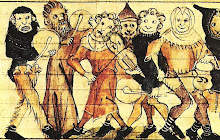
Every day seems to bring another piece of bad news about a high-level musical person who occupies a position of power in a partially closed and often merit-based musical institution. It seems that so far the people who have been exposed by adding the role of sexual predator to their role of teacher have been male. Is it because women don't usually abuse their power within musical institutions? Is it because women, no matter how well they play, write, conduct, sing, or administrate, don't have the same kind of power/entitlement mix that men have?
Operating to the extent that I do in the larger musical world, I do know that women participate in power struggles. And there are a multitude of hierarchies that women in every stage of the game of music have to work within. Women who men see as having power are feared. Men who men see as having power are admired.
When I was a CD reviewer I believe that I must have had power. Most readers had no idea about my gender because only my last name appeared on reviews. I know that I was despised by some (everyone hates a critic unless that critic gives a glowing review). Could I ever have inspired fear? Was I ever admired? Did it matter? Does it matter now?
I know that I was a "token" woman on the reviewing staff of the American Record Guide. Sometimes, out of a reviewing staff of 60 or so, there were two or three women writing reviews. And when the musical blogosphere was in its heyday, most of the musical bloggers were men. Now it seems that the field of musical bloggery is dominated by women, but the field of musical bloggery is a ghost of its former self. There are far fewer people who read blogs now. And, perhaps because of the degree of difficulty leaving a comment by way of a cell phone is, there are fewer still who engage by making comments.
Yet we persist.
Let me reflect on my youth a bit. When I was a teenager with a fierce dedication to music and a serious desire to engage in discussions about music as an equal, I believe I might have had the respect of my male peers. I know that I had the respect of the professional musicians (teachers and colleagues of my father) I interacted with. But I was a child with the kind of eagerness and dedication that projected an optimism nobody wanted to negate. Everyone likes a smart kid.
Once I was a college-age woman I found it harder to engage as an equal with my male peers because of the obsession with attractiveness that permeated all of our lives. If I was not attractive to a (straight) male musician, I was not worth talking to. If I was attractive to a male musician, I was rarely taken seriously as a thinking person or as a person with talent or a person with high aspirations. In a world where attractiveness-fueled self-esteem was currency, I was piss poor.
I did have wonderful encounters in the hallways with older male faculty members (I remember talking with Paul Doktor, David Diamond, and Rolf Fjelde) who were all gracious and interested in talking with me for the sake of talking about interesting stuff. I also did have great friends among my peers, and my fellow students who came to Juilliard with a college education served as inspiring teachers. And I had wonderful friends who were women.
My own teacher was deficient in the "teaching" department, but I was fortunate to find two teachers on the outside who taught me for free. One was a flutist who was just getting started in what has turned out to be a fantastic teaching career. He was appalled at the neglect that my teacher demonstrated, and he was eager to have a really good student who would take his (then way out-of-the-box) ideas seriously. The other teacher was not a flutist, but he wanted to "pay forward" the kindness of lessons that had been given to him, and wanted to emulate his teacher and keep his teacher's ideas alive. Both these teachers were men, and there was NEVER A HINT of impropriety in either relationship. I owe my life to these people. One is still a very close friend, and the other is inaccessible.
Some of my friends have experienced the dark side of trying to balance studying seriously and having to cope with the complications of having student/teacher relationship become intimate. Some people thought of it as a kind of flattery--that such a relationship was a relationship between equals. Some people felt trapped, and so no way of getting away without compromising their careers. This happened to students who were women and students who were men.
There are cases when cross-generational relationships can be relationships between equals, but the larger number of cross-generational relations between teachers and their students are not relationships between equals. They are exercises of power on the part of the person who has the career, has the influence, and often has a family.
Perhaps we are headed into a healthier musical world now, or at least a musical world where people who have, in the past, been able to get away with abusing their power, are seeing the consequences of that abuse.
Showing posts with label Bloggery. Show all posts
Showing posts with label Bloggery. Show all posts
Tuesday, December 18, 2018


Sunday, October 21, 2018
The Illusion of Social Media
I feel nostalgic for the musical communities that this format of blogging made possible during its first decade, and I remember how much I enjoyed participating in long and interesting discussions on other blog posts in the musical blogosphere. Everything changed once Google Reader stopped making a lively blogosphere possible.
I was an early participant (I began in 2005), and I am one of the few musical bloggers from those days who posts with any regularity. Musicians seem to have moved their musical lives to Facebook, where they can find groups of people with specific musical interests and people from their musical pasts (and other pasts) to interact with. I use Facebook as well, and sometimes I put links to posts from this blog and my Thematic Catalog blog there. Those posts are read by a relative handful of people, and "liked" by many who scroll by without reading.
That is the way Facebook has "trained" us to engage. Scroll. Like. Move on. Scroll. Like. Move on. Comment. Move on. Feel disconnected. Try again. Try again later. Feel hopeful that someone will engage. Move on. Feel foolish. Feel disconnected. Rinse and repeat.
One thing that Facebook seems to do is to make some posts available to a lot of people who "like" them. One recent post I made from a moving car got "liked" by seventy people:

It was an iPhone picture with very little in the way of text. It took very little in the way of thought, and even less in the way of effort to post. Other posts I have made on Facebook, particularly posts I have made in musically oriented forums that have links to this blog or to my Thematic Catalog blog, seem to only be seen by a handful of people.
Oddly, except for birthday notices, I see very few of the posts that my Facebook friends make in my Facebook feed. It seems, in a way, that Facebook has narrowed my online social world, and it has turned social interaction into something more like window shopping.
Scroll. Like. Move on. Scroll. Like. Move on. Comment. Move on. Feel disconnected. Try again. Try again later. Feel hopeful that someone will engage. Move on. Feel foolish. Feel disconnected. Rinse and repeat.
There are "pages" on Facebook, and these seem to be offered for free. I "host" a few of these pages. There's one for my Thematic Catalog, there's one for Summer Strings, and there's one for Downstate Strings (my string quartet). I regularly get "suggestions" from Facebook that if I were to pay a small amount of money, those pages and the posts I put on them could be seen by a lot of people. It is the same with "events." If I want people to know about a free concert I am giving, I guess can pay money for my notice to go to Facebook feeds.
I wonder if by not paying into the "service" I am limiting my ability to communicate through Facebook. I have nothing to gain monetarily through my participation in this kind of Facebook world, so I don't feel that I should throw money at the problem of not feeling engaged. Making more Facebook posts doesn't help me feel more socially engaged, except on birthdays. A Facebook birthday is something extraordinary.
Scroll. Like. Move on. Scroll. Like. Move on. Comment. Move on. Feel disconnected. Try again. Try again later. Feel hopeful that someone will engage. Move on. Feel foolish. Feel disconnected. Rinse and repeat.
I think that the problem is our social interactions are being streamlined and directed by the automatons that regulate the Facebook "highway." Some of us choose to no longer engage in the social ways of Facebook. But in a post-Facebook world it is difficult to find a sense of community anywhere, even in our own physical communities. Facebook is either where the "audience" is, or we are given the illusion that Facebook is where the audience is.
Now I will wax nostalgic. When we first arrived at our little university town in the mid 1980s, there was a newspaper that reported on much of what went on in town. There was an insert in the paper that listed all the concerts that were being given at the university, and there were articles promoting events. We used to write letters to the editor. Our kids used to write letters to the editor. Local people used to write columns. The paper was a big deal. The paper felt like a vital organ in our community until the early 2000s.
Now our local paper is owned by a conglomerate, and aside from the obituaries, there is very little of local interest. We stopped subscribing because there is nothing worth reading. The (no longer) local paper does host a Facebook page, but it does very little in the way of creating a feeling of community for our town.
I try to get out. I participate in the local university orchestra in order to try connect with people in my community. I play in a local Renaissance ensemble. In the summer I get to connect with people through Summer Strings. I go to political forums, to funerals, and to concerts. And I go to the grocery store, which sometimes provides for a meaningful social interaction.
Scroll. Like. Move on. Scroll. Like. Move on. Comment. Move on. Feel disconnected. Try again. Try again later. Feel hopeful that someone will engage. Move on. Feel foolish. Feel disconnected. Rinse and repeat.
I was an early participant (I began in 2005), and I am one of the few musical bloggers from those days who posts with any regularity. Musicians seem to have moved their musical lives to Facebook, where they can find groups of people with specific musical interests and people from their musical pasts (and other pasts) to interact with. I use Facebook as well, and sometimes I put links to posts from this blog and my Thematic Catalog blog there. Those posts are read by a relative handful of people, and "liked" by many who scroll by without reading.
That is the way Facebook has "trained" us to engage. Scroll. Like. Move on. Scroll. Like. Move on. Comment. Move on. Feel disconnected. Try again. Try again later. Feel hopeful that someone will engage. Move on. Feel foolish. Feel disconnected. Rinse and repeat.
One thing that Facebook seems to do is to make some posts available to a lot of people who "like" them. One recent post I made from a moving car got "liked" by seventy people:

It was an iPhone picture with very little in the way of text. It took very little in the way of thought, and even less in the way of effort to post. Other posts I have made on Facebook, particularly posts I have made in musically oriented forums that have links to this blog or to my Thematic Catalog blog, seem to only be seen by a handful of people.
Oddly, except for birthday notices, I see very few of the posts that my Facebook friends make in my Facebook feed. It seems, in a way, that Facebook has narrowed my online social world, and it has turned social interaction into something more like window shopping.
Scroll. Like. Move on. Scroll. Like. Move on. Comment. Move on. Feel disconnected. Try again. Try again later. Feel hopeful that someone will engage. Move on. Feel foolish. Feel disconnected. Rinse and repeat.
There are "pages" on Facebook, and these seem to be offered for free. I "host" a few of these pages. There's one for my Thematic Catalog, there's one for Summer Strings, and there's one for Downstate Strings (my string quartet). I regularly get "suggestions" from Facebook that if I were to pay a small amount of money, those pages and the posts I put on them could be seen by a lot of people. It is the same with "events." If I want people to know about a free concert I am giving, I guess can pay money for my notice to go to Facebook feeds.
I wonder if by not paying into the "service" I am limiting my ability to communicate through Facebook. I have nothing to gain monetarily through my participation in this kind of Facebook world, so I don't feel that I should throw money at the problem of not feeling engaged. Making more Facebook posts doesn't help me feel more socially engaged, except on birthdays. A Facebook birthday is something extraordinary.
Scroll. Like. Move on. Scroll. Like. Move on. Comment. Move on. Feel disconnected. Try again. Try again later. Feel hopeful that someone will engage. Move on. Feel foolish. Feel disconnected. Rinse and repeat.
I think that the problem is our social interactions are being streamlined and directed by the automatons that regulate the Facebook "highway." Some of us choose to no longer engage in the social ways of Facebook. But in a post-Facebook world it is difficult to find a sense of community anywhere, even in our own physical communities. Facebook is either where the "audience" is, or we are given the illusion that Facebook is where the audience is.
Now I will wax nostalgic. When we first arrived at our little university town in the mid 1980s, there was a newspaper that reported on much of what went on in town. There was an insert in the paper that listed all the concerts that were being given at the university, and there were articles promoting events. We used to write letters to the editor. Our kids used to write letters to the editor. Local people used to write columns. The paper was a big deal. The paper felt like a vital organ in our community until the early 2000s.
Now our local paper is owned by a conglomerate, and aside from the obituaries, there is very little of local interest. We stopped subscribing because there is nothing worth reading. The (no longer) local paper does host a Facebook page, but it does very little in the way of creating a feeling of community for our town.
I try to get out. I participate in the local university orchestra in order to try connect with people in my community. I play in a local Renaissance ensemble. In the summer I get to connect with people through Summer Strings. I go to political forums, to funerals, and to concerts. And I go to the grocery store, which sometimes provides for a meaningful social interaction.
Scroll. Like. Move on. Scroll. Like. Move on. Comment. Move on. Feel disconnected. Try again. Try again later. Feel hopeful that someone will engage. Move on. Feel foolish. Feel disconnected. Rinse and repeat.
Thursday, October 12, 2017
Badges
I got a notice today telling me that Musical Assumptions is one of the top 100 music education blogs on the planet. Any attempt to resuscitate the musical blogosphere is a good thing, so since I have earned the right to display this badge, I will:

I also got a badge last week from my orchestra to commemorate ten years of membership:

And no list of badges would be complete without posting pictures of my swimming buttons. These are not my actual swimming buttons, which disappeared during the last half century. But I did work hard during my childhood in the 1960s to earn buttons that look exactly like these. I still remember how difficult it was to learn to float in order to get the "beginner" button. I also remember the solemnity of the button-giving ceremony.

I also got a badge last week from my orchestra to commemorate ten years of membership:

And no list of badges would be complete without posting pictures of my swimming buttons. These are not my actual swimming buttons, which disappeared during the last half century. But I did work hard during my childhood in the 1960s to earn buttons that look exactly like these. I still remember how difficult it was to learn to float in order to get the "beginner" button. I also remember the solemnity of the button-giving ceremony.

Tuesday, June 06, 2017
Escalators, Elevators, Facebook, and Bloggery
I live in a city that doesn't have escalators. We used to drive for an hour so that our kids could have the fun of riding a department store escalator. It was a treat for them. It was a novelty.
This was long before anyone thought about the internet as we know it. It was a treat and a novelty to those of us who live outside of bustling cities. When blogging became a way to share writing on the internet, it was like the opening up of a door.
The early days of the musical blogosphere were a lot of fun for me. The 2017 bloggery experience is only a shadow of what it was in 2007. Most of the musical bloggers have stopped writing. Some of them started as a way to find community in a world that dismisses classical music as a "genre," and then left in favor of communicating on Facebook where you can have the illusion of a community without devoting the time and care that maintaining a blog demands. It is also very iPhone friendly. Blog platforms like this one are difficult to use on an iPhone.
I have been thinking lately about how similar a Facebook experience is to an escalator experience, and how the rest of the internet (i.e. the blogosphere) is more like an elevator experience.
You summon an elevator and after a short wait you enter one of a few enclosed rooms that can hold a few people. You might be completely alone, or you might have company. You might smile at the other people in the elevator, or you might avoid eye contact. It's your choice. You will forget about your elevator mates as soon as they get off, and they will forget about you just as quickly, unless you have some meaningful contact. Your journey feels safe and private, even though it may not be either. Still it is possible to travel through the tubes of the non-social internets in search of information and enrichment in a way that is enjoyable and self directed. Elevators are almost always located near stairwells, so you can choose whether to ride or walk.
Facebook takes you for an escalator ride. There is an element of danger in the escalator ride. The ride stimulates your attention to both the presence and absence of your physical self as you look at reflections of other escalators. I find that when I am riding an escalator I have a strange sense of tension and a deep desire to reach the point where the escalator stops and I can step off safely.
I feel a similar mixture of danger and desire every time I step onto the Facebook "escalator." Like an escalator in a big department store, Facebook literally directs your attention where its advertisers want it to go. Once you go on Facebook a few times and look at the ads that register as "seen" in your newsfeed, they come up more often. The walls of the escalator entices you with mirrors (analogous to the people who validate your existence and "like" what you post) and shiny objects: friends who post pictures, clever commentary, and links to articles that you can sometimes, but not always, access via Facebook (magazine and newspaper articles are often behind a paywall).
Your friends and their friends leave projections of their best selves for you to glance at and feel a momentary sense of connection with, only to be forgotten when the "ride" stops. Stores are designed so that you can't miss featured products because they are placed near the end of the escalators. We have come to accept that. On a Facebook "ride" you see images of promoted products again and again, and you accept their presence in your news feed as part of the experience. I seems like the price you pay for having friends on Facebook.
This was long before anyone thought about the internet as we know it. It was a treat and a novelty to those of us who live outside of bustling cities. When blogging became a way to share writing on the internet, it was like the opening up of a door.
The early days of the musical blogosphere were a lot of fun for me. The 2017 bloggery experience is only a shadow of what it was in 2007. Most of the musical bloggers have stopped writing. Some of them started as a way to find community in a world that dismisses classical music as a "genre," and then left in favor of communicating on Facebook where you can have the illusion of a community without devoting the time and care that maintaining a blog demands. It is also very iPhone friendly. Blog platforms like this one are difficult to use on an iPhone.
I have been thinking lately about how similar a Facebook experience is to an escalator experience, and how the rest of the internet (i.e. the blogosphere) is more like an elevator experience.
You summon an elevator and after a short wait you enter one of a few enclosed rooms that can hold a few people. You might be completely alone, or you might have company. You might smile at the other people in the elevator, or you might avoid eye contact. It's your choice. You will forget about your elevator mates as soon as they get off, and they will forget about you just as quickly, unless you have some meaningful contact. Your journey feels safe and private, even though it may not be either. Still it is possible to travel through the tubes of the non-social internets in search of information and enrichment in a way that is enjoyable and self directed. Elevators are almost always located near stairwells, so you can choose whether to ride or walk.
Facebook takes you for an escalator ride. There is an element of danger in the escalator ride. The ride stimulates your attention to both the presence and absence of your physical self as you look at reflections of other escalators. I find that when I am riding an escalator I have a strange sense of tension and a deep desire to reach the point where the escalator stops and I can step off safely.
I feel a similar mixture of danger and desire every time I step onto the Facebook "escalator." Like an escalator in a big department store, Facebook literally directs your attention where its advertisers want it to go. Once you go on Facebook a few times and look at the ads that register as "seen" in your newsfeed, they come up more often. The walls of the escalator entices you with mirrors (analogous to the people who validate your existence and "like" what you post) and shiny objects: friends who post pictures, clever commentary, and links to articles that you can sometimes, but not always, access via Facebook (magazine and newspaper articles are often behind a paywall).
Your friends and their friends leave projections of their best selves for you to glance at and feel a momentary sense of connection with, only to be forgotten when the "ride" stops. Stores are designed so that you can't miss featured products because they are placed near the end of the escalators. We have come to accept that. On a Facebook "ride" you see images of promoted products again and again, and you accept their presence in your news feed as part of the experience. I seems like the price you pay for having friends on Facebook.
Friday, May 22, 2015
Why I (Still) Blog
In the beginning of May, Fresca, a person who often comments on Michael's blog, posed a public question to people who continue to keep blogs on the internet. Michael answered promptly in this post, but it has taken me a while to come up with an appropriate response. I have decided to make my contribution in the form of an interview because I can. I have full editorial control of my blog. I'll even have an old alias (a name I used to use to deflect unwelcome male attention in public places) do the interviewing. Veranda Davenport hasn't been in my life for a long time.
Veranda: I see that even though you are on Facebook you still keep a blog. Why do you need to write long blog posts when you can instantly share pictures, birthday greetings, and observations with hundreds of people you know?
Elaine: There is a "notes" feature on Facebook which works kind of like a blog, but most Facebook users prefer to scroll through pictures clicking "like" when they see something they like, and leave brief comments that are either witty or supportive. Facebook is a good way to stay "in touch" with friends without going too far beneath the surface. It is kind of like "seeing" a lot of friends in a crowded cafeteria (all the cafeterias of life combined, perhaps) and exchanging, smiles, brief greetings, and words of support. The greetings have to be brief and pleasant because the cafeteria is a public space and there are many people to greet. I find the "cafeteria" a bit too noisy for substantial relationships.
Perhaps the blogosphere is more like an array of sit-down restaurants that you go to for interesting well-prepared food and intelligent conversations.
Sometimes I make links to blog posts (posts I write or posts from Michael's blog) on Facebook. A handful of Facebook friends read them, but most of my Facebook friends don't.
People do more and more of their on-line browsing using smartphones. The little box for comments and the clumsiness of the smartphone keyboard makes it more and more difficult to comment. That is a shame. I miss the free exchange of comments that used to be part of the blogging experience.
Veranda: Your blog posts do not seem to have any rhyme or reason. Why don't you give your blog more structure?
Elaine: I like to write what I feel like writing when I feel like writing it. Blog posts are not really bound in time. It's probably a good thing that most of my posts concern subjects that are not connected with current events. My Thematic Catalog blog is very structured, but that's because it's a functional catalog of music that I have written. I don't see any reason to structure my Musical Assumptions blog, so I don't.
Veranda: A lot of people keep blogs in order to promote themselves and the work they do. Why don't you use your blog to promote your work?
Elaine: I love the idea of sharing information, music, and ideas, particularly ideas about playing and teaching. I do what I can to let people know about the music I have written by linking to my Thematic Catalog blog, but I really see no reason to go beyond that. I prefer to have my work evaluated by people who play it and people who hear it. I don't feel any desire to make any claims about the quality of the work I do. People can make their own choices.
Veranda: Thank you, Elaine.
Elaine: Thank you, Veranda.
Veranda: I see that even though you are on Facebook you still keep a blog. Why do you need to write long blog posts when you can instantly share pictures, birthday greetings, and observations with hundreds of people you know?
Elaine: There is a "notes" feature on Facebook which works kind of like a blog, but most Facebook users prefer to scroll through pictures clicking "like" when they see something they like, and leave brief comments that are either witty or supportive. Facebook is a good way to stay "in touch" with friends without going too far beneath the surface. It is kind of like "seeing" a lot of friends in a crowded cafeteria (all the cafeterias of life combined, perhaps) and exchanging, smiles, brief greetings, and words of support. The greetings have to be brief and pleasant because the cafeteria is a public space and there are many people to greet. I find the "cafeteria" a bit too noisy for substantial relationships.
Perhaps the blogosphere is more like an array of sit-down restaurants that you go to for interesting well-prepared food and intelligent conversations.
Sometimes I make links to blog posts (posts I write or posts from Michael's blog) on Facebook. A handful of Facebook friends read them, but most of my Facebook friends don't.
People do more and more of their on-line browsing using smartphones. The little box for comments and the clumsiness of the smartphone keyboard makes it more and more difficult to comment. That is a shame. I miss the free exchange of comments that used to be part of the blogging experience.
Veranda: Your blog posts do not seem to have any rhyme or reason. Why don't you give your blog more structure?
Elaine: I like to write what I feel like writing when I feel like writing it. Blog posts are not really bound in time. It's probably a good thing that most of my posts concern subjects that are not connected with current events. My Thematic Catalog blog is very structured, but that's because it's a functional catalog of music that I have written. I don't see any reason to structure my Musical Assumptions blog, so I don't.
Veranda: A lot of people keep blogs in order to promote themselves and the work they do. Why don't you use your blog to promote your work?
Elaine: I love the idea of sharing information, music, and ideas, particularly ideas about playing and teaching. I do what I can to let people know about the music I have written by linking to my Thematic Catalog blog, but I really see no reason to go beyond that. I prefer to have my work evaluated by people who play it and people who hear it. I don't feel any desire to make any claims about the quality of the work I do. People can make their own choices.
Veranda: Thank you, Elaine.
Elaine: Thank you, Veranda.
Saturday, February 07, 2015
Ten Years of Making Musical Assumptions
I started this blog on February 7, 2005. As I look back at 2005, I feel proud of the way I started, and as I look back at the 2006 posts I have made through the decade, I'm proud of the way I have continued.
I wanted this blog to be a commercial-free space, and it has remained one. I wanted this blog to serve as a resource for people curious about specific aspects of music, and it has been. I'm pretty lousy about doing the kind of "business" that composers need to do in order for musicians to become familiar with their music, but people have become familiar with the music I have written through this blog and through my Thematic Catalog blog, which I started in June of 2006.
Since beginning this blog I have become less of a luddite. I now have an iPod, even though I announced that I was not a "pod person" several years back. I participate in Facebook occasionally, even though I never thought I would (I even considered Facebook the enemy of bloggery). I'm even sharing this post there.
I love the idea of sharing information, observations, and commentary without having "strings" attached (editors and money being the longest and strongest), and I plan to continue participating in my corner of the musical blogosphere as long as I am able.
Thank you to all my readers unknown and known, and a big thanks to Michael, who serves as an inspiration for all bloggers, near and far.
I wanted this blog to be a commercial-free space, and it has remained one. I wanted this blog to serve as a resource for people curious about specific aspects of music, and it has been. I'm pretty lousy about doing the kind of "business" that composers need to do in order for musicians to become familiar with their music, but people have become familiar with the music I have written through this blog and through my Thematic Catalog blog, which I started in June of 2006.
Since beginning this blog I have become less of a luddite. I now have an iPod, even though I announced that I was not a "pod person" several years back. I participate in Facebook occasionally, even though I never thought I would (I even considered Facebook the enemy of bloggery). I'm even sharing this post there.
I love the idea of sharing information, observations, and commentary without having "strings" attached (editors and money being the longest and strongest), and I plan to continue participating in my corner of the musical blogosphere as long as I am able.
Thank you to all my readers unknown and known, and a big thanks to Michael, who serves as an inspiration for all bloggers, near and far.
Friday, March 21, 2014
Contemplating Joseph Kerman's Contemplating Music
Back in the beginnings of the musical blogosphere (about ten years ago) a great number of academically-minded musicians (i.e. musicologists) used blogs as places to "publish" some of the papers they wrote in graduate school. Yesterday we lost Joseph Kerman, one of the shining lights in the world of musicology. In honor of him and in honor of the (now vanished) tradition of exposing graduate-school writing to the larger world on blogs, I offer you my graduate-school "take" on the first two chapters of Joseph Kerman's Contemplating Music:

The first two chapters of Joseph Kerman’s Contemplating Music are extremely well organized and packed with information about the origins of musicology and its “founders,” the disciplines related to musicology, and attitudes and concerns about contemporary music. He discusses musicology as a profession and addresses what he considers some conflicting issues concerning musicology at the time of his writing (1985). Kerman defines musicology in both a broad way and a narrow way, and makes a case for the former. He cites Charles Seeger as his model for a comprehensive musicologist. Mainly thought of as an ethnomusicologist, Seeger was a virtual musical omnivore who, because of his many different interests within the field of music, basically created the field of musicology in America.
In the process of talking about the world in musicological terms, Kerman manages to weave in some very interesting information about music of the past, and he cites the trend for musicologists to be conservative. I am very impressed with his discussion of the work of Philipp Spitta. Kerman's discussion of the re-assessment of Bach by the New Bach Scholars illustrates the need for a community of passionate musicologists with different areas of expertise to do the work of authenticating and dating Bach's music correctly. Kerman mentions that, at the time of his writing, musicologists had done comprehensive work on the music of Bach, but they had not begun to critique the broadly accepted evolution of Bach’s style. I’m sure, partially due to Kerman's comment here, there is now a whole library of opinion on the matter, as well as a library of commentary and criticism on the critical writing.
Kerman asserts that the discipline of music criticism is not on par with either musicology or music theory. He mentions that in 1985, post-structuralism, deconstruction, and serious feminism were not present in either the study of musicology or the study of music theory. This statement must have been seen as a feeding ground for topic-hungry scholars. Though post-structuralism has not yet made it into music criticism, we now have dozens of books and essays written in the 1990s that include feminist music criticism and gender studies, as well as a healthy (or maybe an unhealthy) handful about deconstruction and music.
Kerman writes rather scientifically and factually about the disciplines he respects, but he tends to get more emotional when he writes disparagingly about journalistic criticism. Some publications and newspapers from the 1980s employed excellent music critics, but many did not. I think that Kerman, for better or for worse, might have bruised the egos of a few competent journalists by writing about the journalistic criticism the way he did. It is also important to remember that the journalistic record is very valuable for understanding music history, and is vital for people who want to follow musical activities in places where they are unable to attend concerts.
In the course of discussing some of the major figures in musicology, Kerman writes about material, attitudes, and styles that concern 20th century music. He discusses the prescriptive as well as the descriptive nature of modern music theory, mentioning that composers often feel the need to write music using the analytical methods devised by theorists in order to keep in step with the times. To give weight to his argument, Kerman mentions key composers, schools and styles.
Kerman's perception regarding the once-progressive Peter Maxwell Davies and conservative trends in British music is remarkable. Kerman mentions Davies fleetingly in the context of British music as a student in the 1950s in need of a teacher, and then he goes on to discuss the generally “behind-the-times” nature of British music. In the 1980s Davies, with his extraordinary imagination, proved to be an exception to the rule that British composers were more traditional than everyone else, but in the later 1990s his music became almost archetypically conservative.
Kerman mentions that musicologists are respected for what they know about music but not their insights into the aesthetics of music. Nowhere in either chapter does he mention anything about the real stuff of musical performance, the only real way that music is able to live. The performing musician, it seems, is not as important to the musicologist as the non-performing musician.
Music is far more than a historical, theoretical, and social practice; it is an expressive and emotional artistic one. Music offers a vehicle for expression of emotions that can be appreciated on many levels, especially on the non-intellectual level. It seems that the study of musicology, according to Kerman, is intended for musicologists and scholars rather than for practicing musicians. When he talks about the implication of musicologists as failed musicians, Kerman writes about the way musicologists separate musical passion and insight in their scholarly work, but he does not address this issue in any detail. I suppose it is out of the realm of musicology.
These chapters are a terrific introduction to the vast field of musicology. Even though they look at musicology from the musical atmosphere of the 1980s, they still serve as a point of departure for creative thinking about music.

The first two chapters of Joseph Kerman’s Contemplating Music are extremely well organized and packed with information about the origins of musicology and its “founders,” the disciplines related to musicology, and attitudes and concerns about contemporary music. He discusses musicology as a profession and addresses what he considers some conflicting issues concerning musicology at the time of his writing (1985). Kerman defines musicology in both a broad way and a narrow way, and makes a case for the former. He cites Charles Seeger as his model for a comprehensive musicologist. Mainly thought of as an ethnomusicologist, Seeger was a virtual musical omnivore who, because of his many different interests within the field of music, basically created the field of musicology in America.
In the process of talking about the world in musicological terms, Kerman manages to weave in some very interesting information about music of the past, and he cites the trend for musicologists to be conservative. I am very impressed with his discussion of the work of Philipp Spitta. Kerman's discussion of the re-assessment of Bach by the New Bach Scholars illustrates the need for a community of passionate musicologists with different areas of expertise to do the work of authenticating and dating Bach's music correctly. Kerman mentions that, at the time of his writing, musicologists had done comprehensive work on the music of Bach, but they had not begun to critique the broadly accepted evolution of Bach’s style. I’m sure, partially due to Kerman's comment here, there is now a whole library of opinion on the matter, as well as a library of commentary and criticism on the critical writing.
Kerman asserts that the discipline of music criticism is not on par with either musicology or music theory. He mentions that in 1985, post-structuralism, deconstruction, and serious feminism were not present in either the study of musicology or the study of music theory. This statement must have been seen as a feeding ground for topic-hungry scholars. Though post-structuralism has not yet made it into music criticism, we now have dozens of books and essays written in the 1990s that include feminist music criticism and gender studies, as well as a healthy (or maybe an unhealthy) handful about deconstruction and music.
Kerman writes rather scientifically and factually about the disciplines he respects, but he tends to get more emotional when he writes disparagingly about journalistic criticism. Some publications and newspapers from the 1980s employed excellent music critics, but many did not. I think that Kerman, for better or for worse, might have bruised the egos of a few competent journalists by writing about the journalistic criticism the way he did. It is also important to remember that the journalistic record is very valuable for understanding music history, and is vital for people who want to follow musical activities in places where they are unable to attend concerts.
In the course of discussing some of the major figures in musicology, Kerman writes about material, attitudes, and styles that concern 20th century music. He discusses the prescriptive as well as the descriptive nature of modern music theory, mentioning that composers often feel the need to write music using the analytical methods devised by theorists in order to keep in step with the times. To give weight to his argument, Kerman mentions key composers, schools and styles.
Kerman's perception regarding the once-progressive Peter Maxwell Davies and conservative trends in British music is remarkable. Kerman mentions Davies fleetingly in the context of British music as a student in the 1950s in need of a teacher, and then he goes on to discuss the generally “behind-the-times” nature of British music. In the 1980s Davies, with his extraordinary imagination, proved to be an exception to the rule that British composers were more traditional than everyone else, but in the later 1990s his music became almost archetypically conservative.
Kerman mentions that musicologists are respected for what they know about music but not their insights into the aesthetics of music. Nowhere in either chapter does he mention anything about the real stuff of musical performance, the only real way that music is able to live. The performing musician, it seems, is not as important to the musicologist as the non-performing musician.
Music is far more than a historical, theoretical, and social practice; it is an expressive and emotional artistic one. Music offers a vehicle for expression of emotions that can be appreciated on many levels, especially on the non-intellectual level. It seems that the study of musicology, according to Kerman, is intended for musicologists and scholars rather than for practicing musicians. When he talks about the implication of musicologists as failed musicians, Kerman writes about the way musicologists separate musical passion and insight in their scholarly work, but he does not address this issue in any detail. I suppose it is out of the realm of musicology.
These chapters are a terrific introduction to the vast field of musicology. Even though they look at musicology from the musical atmosphere of the 1980s, they still serve as a point of departure for creative thinking about music.
Monday, August 12, 2013
Maybe it's just me . . .
It is interesting to look at Lisa Hirsch's latest post about her place in the musical blogosphere, and to read Alex Ross's post about his (which mentions my post, and has upped my readership by tens). I have really only glanced at The Rambler since it moved to WordPress a couple of years ago (I thought he just stopped writing), but I think I'll bookmark Tim's page there now. I just left a comment on his most recent post. Perhaps this blog post might stimulate another comment or two there, or perhaps not. I imagine that the answer is "not."
My issue is not the number of visits I get, but the general lack of engagement I notice in general. Most of the blogs that I used to read are no longer active. Perhaps people thought of them as a stepping-stone towards more professional writing (as in Soho the Dog), or people have migrated to Facebook, where they can feel good about pressing the "like" button rather than engage in some kind of a discussion. I find that kind of discussion that used to happen in the "interblogs" now happens on "legitimate" commercial sites and newspapers, but most of it isn't about music. Incidentally, most of my visitors of late (199 as of right now) have come to this post from blog posts about the gradual fall of the musical blogosphere (particularly this one). Most of my posts, according to my blogger stats, have 30-60 views. This is by no means anything like the "big time," but I know the "big time" and don't really have much of a desire to be part of it because I like to be able to speak my mind. Once you reach "big time" status, your opinions are owned by others, and it's difficult to be really honest.
Perhaps we musical bloggers used to be voices in the wilderness, eager to find other living and breathing souls who understood us in some way. Perhaps that wilderness has become overrun with billboards and neon, traffic noises, and tourists taking pictures. Those of us who used to feel we had a voice and a place to be heard are passed over in favor of a "current" authority. Perhaps this has to do with the prestissimo pace that information comes into our lives. On Facebook new stories become old ones, as quickly as old friends become new ones (and then they fade back into the times of the old friendship--sometimes to "places" we would rather not dwell too long). The worlds we now inhabit through our devices have become kind of like bubbles. They emerge, they rise, we chase them, and sometimes we catch them, but once the bubbles pop they are forgotten.
In the end we are all limited human beings who only have so much room in our lives for "stuff," and that includes material stuff as well as intellectual stuff. Why should the internets (in any form) be any different from life in a small town (where hierarchy plays a starring role)? Why should the internets be any different from the schoolyard? Why should the internets be any different from the barnyard?
My issue is not the number of visits I get, but the general lack of engagement I notice in general. Most of the blogs that I used to read are no longer active. Perhaps people thought of them as a stepping-stone towards more professional writing (as in Soho the Dog), or people have migrated to Facebook, where they can feel good about pressing the "like" button rather than engage in some kind of a discussion. I find that kind of discussion that used to happen in the "interblogs" now happens on "legitimate" commercial sites and newspapers, but most of it isn't about music. Incidentally, most of my visitors of late (199 as of right now) have come to this post from blog posts about the gradual fall of the musical blogosphere (particularly this one). Most of my posts, according to my blogger stats, have 30-60 views. This is by no means anything like the "big time," but I know the "big time" and don't really have much of a desire to be part of it because I like to be able to speak my mind. Once you reach "big time" status, your opinions are owned by others, and it's difficult to be really honest.
Perhaps we musical bloggers used to be voices in the wilderness, eager to find other living and breathing souls who understood us in some way. Perhaps that wilderness has become overrun with billboards and neon, traffic noises, and tourists taking pictures. Those of us who used to feel we had a voice and a place to be heard are passed over in favor of a "current" authority. Perhaps this has to do with the prestissimo pace that information comes into our lives. On Facebook new stories become old ones, as quickly as old friends become new ones (and then they fade back into the times of the old friendship--sometimes to "places" we would rather not dwell too long). The worlds we now inhabit through our devices have become kind of like bubbles. They emerge, they rise, we chase them, and sometimes we catch them, but once the bubbles pop they are forgotten.
In the end we are all limited human beings who only have so much room in our lives for "stuff," and that includes material stuff as well as intellectual stuff. Why should the internets (in any form) be any different from life in a small town (where hierarchy plays a starring role)? Why should the internets be any different from the schoolyard? Why should the internets be any different from the barnyard?
Wednesday, July 24, 2013
The Gradual Fall of Musical Bloggery
Last April I noticed that the once-vibrant musical blogosphere had started to slow down. It used to feel very rewarding to write about ideas, post links, and use the little corner of the internet where I squat in whatever manner I chose to use it. Lots of people read my posts, but the number of people who come to my blog has dwindled down to less than half over the last six months. I have been writing at about the same rate, but no matter how much I "give" to the Musical Assumptions "audience," it doesn't do much to stir the pot.

The kinds of musical discussions that used to be on blogs seem to have migrated to Facebook, but they occur in miniature, and they can occur in real time. I guess in this on-line world you have two options: Facebook or Google, and it looks as if Facebook has won.
But I'm loyal to my faithful readers, and I will continue to write here.
August 12th Update: Here's more about this subject.

The kinds of musical discussions that used to be on blogs seem to have migrated to Facebook, but they occur in miniature, and they can occur in real time. I guess in this on-line world you have two options: Facebook or Google, and it looks as if Facebook has won.
But I'm loyal to my faithful readers, and I will continue to write here.
August 12th Update: Here's more about this subject.
Tuesday, July 09, 2013
Like Clockwork
I’m a creature of cyclic habit. It seems that I engage in the same kinds of activities at various times of the year, and sometimes the activities coordinate to the week or the day. Date books, blog posts, lists of pieces I have written, and online activities give me a map that I could probably plot out physically. A friend of mine who was in search of something he couldn’t find called the other day to see if I might happen to have it (a DVD he sent me years ago). Sure enough, I found it immediately and popped it in the mail. This is not the first time this has happened with this particular friend. He said that I was always dependable.
Dependable. That’s me. Always there and always on time. I suppose you could set a clock by my activities. Or a year-long hourglass. I have pretty much done everything in my life according to biological plan (as my last few blogposts, minus the dots--which have nothing to do with biology--have time-stamped).
July is always a dull time. Dull and hot. This year the dullness and hotness is enhanced by the seemingly endless wait for the person who installed our air conditioner to arrive and make our house dependably comfortable. Pretty much the only playing I have been doing is practicing, and I have to limit that because of my tendons. I also find that practicing the violin is less stressful on my left elbow than practicing the viola, so I’m happy that I have an alternative to not practicing. Not practicing is very unhealthy for me.
Our soon-to-be son-in-law (how’s that for hyphenation) put a video of Rachel performing in a cross fit competition (she won second place) on Facebook, so I re-joined Facebook in order to see it. It seems that the last time I rejoined was almost exactly a year ago.

Go figure. It is the same, but life outside of Facebook is different. The social world has really become more digital, and though I’m far more comfortable participating in it through bloggery, it sometimes feels like whatever I do in this space is not really participating in whatever the world has become. People in my own town who I have known for years and years, seem to communicate to one another almost exclusively through Facebook. "Catching up" the old fashioned way, which has always been pleasurable for me, has become kind of spotty during the past few years. Perhaps it takes too much time, or it makes people feel uncomfortable. Perhaps it all looks better in pictures than it sounds in words.
I have learned over the years that in addition to being extremely dependable, I also really need social interaction. I like doing it with music, and the act of sharing music I have written feels really good, but then shortly afterwards, if I don't hear anything from the persons known and unknown who might or might not be playing it, I feel like I have created an open circuit with energy pouring out and going nowhere. When nothing comes back to me in the form of interaction, I feel empty and depleted.
This is nothing new. I have always been this way. I never learn, and I never will.
You would think that Facebook would be the perfect cure for such a state of being. If it were, I would be writing this missive on Facebook (and nobody would read it because it is too long and is not decorated with pictures of happy people having fun). Now that I am exploring Facebook again, I understand something about why the blogosphere has become so much less interactive in recent years. When you are in Facebook, that becomes the portal to the world (and to all worlds). It becomes the party where you spend your on-line interactive time (which is, for many people, their only non-work interactive time). If you want so share something, you keep it in the party. Why go anywhere else when you can spend your time peering into the lives of everyone you knew in all your previous lives without them even knowing you're looking?
What the people at the party choose to ignore is that everything is done with the idea of people generating money by advertising and by selling ads to advertisers, and that the social lubrication is there to make the feeling of being "sold to" less overt and less offensive.
Saturday, January 05, 2013
Music Media Ramble
The other day I was listening to a segment of a podcast that discussed hallucinogenic drugs and the reasons that people enjoy taking them. I have never taken a hallucinogenic drug, but the feelings that people describe about the pleasures of their use seem to be the same kinds of pleasures that I experience with music. These pleasures happen mostly while I am playing, but sometimes they happen when I am listening, and sometimes (rarely) they happen when I am writing. I have to be in too much control of the here and now (and the when, how, and where) when writing, so a poly-sensual state is highly impractical.
The people on this podcast talked about hallucinogenic drugs "re-wiring" the brain. I believe that a lifetime of daily music making has a profound effect on the active brain as well as the subconscious mind. I do believe that music "re-wires" the pleasure centers in the brain. The rewards are slow (and they rarely come from the outside), and true progress is very difficult to measure, but part of the pleasure is the "road" itself. Getting to the point where you can have the physical control to do what you want with a given pitch or a given phrase is a "path" with guideposts, but everyone's path has a different length, a different shape (though never a straight line), and has a different terrain. Most of my greatest musical experiences are private, and the kind of intimacy that results from sharing musical experiences is, I have found, best expressed privately, because words really fail. Musical intimacy is something that cannot be forced, and it is something that can happen with people you otherwise don't necessarily have a close personal bond with. It can also happen with people you otherwise are unable to communicate with through spoken language.
This is what musicians do, and every musician reading this (regardless of their experience with hallucinogenic drugs) probably knows exactly what I am talking about. Music is my drug of choice. It is the way I organize the world, and the way I express myself best. It is what I do when I am alone. It is the way I communicate with dead people and cultures that have crumbled. It is often what I dream about. I keep this blog to share thoughts about music with people who understand, and I know that there are indeed a great many people who do.

This brings me to the "media" part of my ramble, because, despite my attempts to feel otherwise, I still mourn the loss of the early musical blogosphere: the lively one that I found so stimulating during the early days of bloggery (I began in 2005). In the above linked-to post I mentioned Norman Lebrecht's blog, which has somehow taken over the musical blogosphere. It seems to be the only blog with the lively kind of musical commentary that makes the enterprise of bloggery enticing. And the man who worked so hard to claim that classical music was in the process of dying seems more devoted to evaluating obituaries so he can let readers know exactly "whom" has died (that you should have known about) than the stuff that keeps music alive. Most of his entries have very little to do with the kind of stuff that stimulates musical thought and inspires composers to compose and instrumentalists and singers to practice.
What Mr. Lebrecht has done is created a "gossip rag" about the people who move about in the most publicized of musical circles. He has created the "People Magazine" of classical music.
I have taken part in the commentary (and there are some intelligent and thoughtful people who take part in his "forum," though Mr. Lebrecht only seems to join the discussion when someone "important" leaves a comment), but the experience of doing so feels empty for me. It feels like I am contributing to a cause that is more concerned with a "who's who" in music than a "what's what" or even a "how's how."
The people on this podcast talked about hallucinogenic drugs "re-wiring" the brain. I believe that a lifetime of daily music making has a profound effect on the active brain as well as the subconscious mind. I do believe that music "re-wires" the pleasure centers in the brain. The rewards are slow (and they rarely come from the outside), and true progress is very difficult to measure, but part of the pleasure is the "road" itself. Getting to the point where you can have the physical control to do what you want with a given pitch or a given phrase is a "path" with guideposts, but everyone's path has a different length, a different shape (though never a straight line), and has a different terrain. Most of my greatest musical experiences are private, and the kind of intimacy that results from sharing musical experiences is, I have found, best expressed privately, because words really fail. Musical intimacy is something that cannot be forced, and it is something that can happen with people you otherwise don't necessarily have a close personal bond with. It can also happen with people you otherwise are unable to communicate with through spoken language.
This is what musicians do, and every musician reading this (regardless of their experience with hallucinogenic drugs) probably knows exactly what I am talking about. Music is my drug of choice. It is the way I organize the world, and the way I express myself best. It is what I do when I am alone. It is the way I communicate with dead people and cultures that have crumbled. It is often what I dream about. I keep this blog to share thoughts about music with people who understand, and I know that there are indeed a great many people who do.

This brings me to the "media" part of my ramble, because, despite my attempts to feel otherwise, I still mourn the loss of the early musical blogosphere: the lively one that I found so stimulating during the early days of bloggery (I began in 2005). In the above linked-to post I mentioned Norman Lebrecht's blog, which has somehow taken over the musical blogosphere. It seems to be the only blog with the lively kind of musical commentary that makes the enterprise of bloggery enticing. And the man who worked so hard to claim that classical music was in the process of dying seems more devoted to evaluating obituaries so he can let readers know exactly "whom" has died (that you should have known about) than the stuff that keeps music alive. Most of his entries have very little to do with the kind of stuff that stimulates musical thought and inspires composers to compose and instrumentalists and singers to practice.
What Mr. Lebrecht has done is created a "gossip rag" about the people who move about in the most publicized of musical circles. He has created the "People Magazine" of classical music.
I have taken part in the commentary (and there are some intelligent and thoughtful people who take part in his "forum," though Mr. Lebrecht only seems to join the discussion when someone "important" leaves a comment), but the experience of doing so feels empty for me. It feels like I am contributing to a cause that is more concerned with a "who's who" in music than a "what's what" or even a "how's how."
Thursday, July 12, 2012

[That's me back in 1971 as Tzeitel in Fiddler on the Roof]
While mindlessly traveling through places of my past on the internets, I thought about a camp I attended in the summers of 1970 and 1971. It was a fine arts camp in Stockbridge, Massachusetts called "Beaupre." There was drama (my "major"), dance (ballet, modern, Hindu, and Spanish), and art, and everyone took classes in everything. It was an intense experience for me, particularly the social part of it. Stationery was "currency," (mine was vanilla-colored and definitely not cool). Most of the campers were from what is now called the "tri-state area," and I was one of only a handful of campers from the state of Massachusetts. Yes, it is odd that I would be at an overnight camp a mere six miles from my family's summer home, but we were kept so busy that I never really thought about that.
Here's some footage of two of the ethnic dance instructors: Carola Goya and Matteo Vittucci (he just went by "Matteo.")
I was thrilled to find a Facebook group filled with alumni of that camp in those years, and decided that it was worth joining Facebook to read what they had to say about it. I recall that it was a group filled with alumni from my junior high school (the non-existant Weeks, for those who may know the lay of the land in Newton, Massachusetts before 1980) that drew me into the
Facebook vortex the first time.
In 2009, after sufficiently exploring pictures and posts from people I remembered from my past, I decided that Facebooking was not a healthy activity for me, so I stopped. I thought I had cancelled my account, but it seems that after three years away, everything had been buzzing along without me, and everything was still pretty much the same as it was. I communicated a bit with a camp friend or two, said hello to a couple of people who welcomed me back, said hello to a couple of people who never responded, and looked at a bunch of pictures.
Today I got a suggestion that I might want to "friend" someone very dear to me who died a few months ago. That gave me a jolt. I don't think I'll be looking at Facebook much in the future. I much prefer bloggery and e-mail as ways of communicating with the world outside my personal circles of local friends and family.
Monday, April 23, 2012
Whither the Musical Blogosphere
When I entered the blogosphere I had a working relationship with a reliable music publisher who, until he died, did a great deal to promote the music I wrote. I also had plenty of places to write articles for publication, but I did not enjoy having my work edited (for content) because what I had to say did not fit the commercial goals of the publication. I wrote CD reviews for a magazine (and still do) where my content was left intact, so I knew the joy of being able to state what I felt was the truth in print. My first blog posts were articles that I had written at the request of music magazines, but never saw publication as articles.
I also had put in many years in radio, back when radio was a kind of two-way conversation between the person doing the show and the person listening, and the person doing the show was somewhere within a 50 mile radius of the listener. I had many years of experience as a performing musician as well, and had a nice working relationship with my community and the musicians who floated in and out of it over the years. I also had a teaching job at a community college (and still do), and wrote program notes for an orchestra (and still do).
I can't believe that I am having nostalgia about something that never existed in real time and in real space. When musicians (I'll call them "classical musicians) first discovered the blogosphere as a "place" to find like-minded people and to present their ideas about music and music making for discussion, it was like being in a cafe in Vienna at the dawn of the 20th century. I used to feel a wonderful sense of camaraderie there, wherever "there" happened to be, and felt a nice balance between my normal working life and my "sidebar" life in bloggery. What was lacking in my daily life could be found in the connections I made through writing and reading musical blogs. It was a lot of fun.
Things have changed.
After my publisher died, his company was sold to a large entity that had its own agenda. That agenda didn't include promoting my music, so I had to figure out a way to do it myself. That's when I made my thematic catalog blog. I also decided that I was no longer interested in writing music that could only be distributed (sold) by a publisher who may or may not decide to promote it. Musical publishers have the unique ability to decide what they want to make available and what they want to keep unavailable. Most of my published music is available in libraries, so I thought that a catalog blog would be the best way to direct people to music I have written. I am proud of the music I have written, and I don't want it to get too lost in the din.
When I realized that the Werner Icking Archive (now incorporated into the IMSLP) was a perfectly reliable place to make my newly-written music available for musicians to play, I decided to forgo the idea of making 10% royalties on sales of music, and make my music available to musicians without any exchange of money. Keeping track of money is a task that I abhor, and with the amount of money that performing musicians make, considering them a "market" is rather distasteful to me. Being productive is important to me, and communicating with people is important to me. Selling is not.
Unfortunately, in this commercially-driven world, selling is the way the exchange of intellectual proper is evaluated. Bloggers without commercial agendas seem to have slipped out of the musical blogosphere, and the commercially-minded bloggers have taken over. Norman Lebrecht, who I gave a few points to for his interview with Thomas Quasthoff, is contributing to the death that he seems to want for classical music by reporting on gossip from its underbelly. Unfortunately there is little to read at his Slipped Disc blog (notice that I don't have a link) these days. For a while I was enjoying some lively discussions in comments, but there is little worth commenting upon there anymore. It is not a blog about music, it is a blog about superficial musical activity. I don't really care about the music "scene" in large. I care about music.
For a while, while he was writing The Rest is Noise, Alex Ross was the king of the musical blogosphere. All bloggers wanted to be noticed by him, and a "nod" from Ross was a feather in the cap of any musical blogger. He was a "pro" because he blogged at The New Yorker . Though I have found many of Ross' New Yorker articles worthwhile, I was not particularly impressed by the book. I suppose I was in the minority.
Perhaps some people no longer participate in the musical blogosphere because the effort of writing does not give the kind of feedback that they expected it to give. A single voice in the wilderness can be loud and can have a great impact, but when you have millions of single voices offering their opinions about music, you get a cacophonous mess. Perhaps some people have gone elsewhere to blog for money at commercial blogging entities (those that sell advertising), where they might get paid a little bit for their writing.
I'm hanging on because I don't have an alternate agenda. I need to have contact with people in the "outside world" because I always have. I'm not afraid of being wrong when I state an opinion, and though sometimes I end up having the "last word" in a discussion about something, that is not my goal. Perhaps, in this age of Facebook and twitter (two entities I don't participate in because of their superficiality) the blogosphere will never return to its former "self." One blogger I enjoy reading jokingly defined blogs as being "so 2008". Perhaps that says it all. But, for the sake of people who prefer to communicate in words rather than captioned pictures, and in paragraphs rather than the number of characters you are allowed in twitter (whatever that number is), I'll remain where I am and who I am.
I also had put in many years in radio, back when radio was a kind of two-way conversation between the person doing the show and the person listening, and the person doing the show was somewhere within a 50 mile radius of the listener. I had many years of experience as a performing musician as well, and had a nice working relationship with my community and the musicians who floated in and out of it over the years. I also had a teaching job at a community college (and still do), and wrote program notes for an orchestra (and still do).
I can't believe that I am having nostalgia about something that never existed in real time and in real space. When musicians (I'll call them "classical musicians) first discovered the blogosphere as a "place" to find like-minded people and to present their ideas about music and music making for discussion, it was like being in a cafe in Vienna at the dawn of the 20th century. I used to feel a wonderful sense of camaraderie there, wherever "there" happened to be, and felt a nice balance between my normal working life and my "sidebar" life in bloggery. What was lacking in my daily life could be found in the connections I made through writing and reading musical blogs. It was a lot of fun.
Things have changed.
After my publisher died, his company was sold to a large entity that had its own agenda. That agenda didn't include promoting my music, so I had to figure out a way to do it myself. That's when I made my thematic catalog blog. I also decided that I was no longer interested in writing music that could only be distributed (sold) by a publisher who may or may not decide to promote it. Musical publishers have the unique ability to decide what they want to make available and what they want to keep unavailable. Most of my published music is available in libraries, so I thought that a catalog blog would be the best way to direct people to music I have written. I am proud of the music I have written, and I don't want it to get too lost in the din.
When I realized that the Werner Icking Archive (now incorporated into the IMSLP) was a perfectly reliable place to make my newly-written music available for musicians to play, I decided to forgo the idea of making 10% royalties on sales of music, and make my music available to musicians without any exchange of money. Keeping track of money is a task that I abhor, and with the amount of money that performing musicians make, considering them a "market" is rather distasteful to me. Being productive is important to me, and communicating with people is important to me. Selling is not.
Unfortunately, in this commercially-driven world, selling is the way the exchange of intellectual proper is evaluated. Bloggers without commercial agendas seem to have slipped out of the musical blogosphere, and the commercially-minded bloggers have taken over. Norman Lebrecht, who I gave a few points to for his interview with Thomas Quasthoff, is contributing to the death that he seems to want for classical music by reporting on gossip from its underbelly. Unfortunately there is little to read at his Slipped Disc blog (notice that I don't have a link) these days. For a while I was enjoying some lively discussions in comments, but there is little worth commenting upon there anymore. It is not a blog about music, it is a blog about superficial musical activity. I don't really care about the music "scene" in large. I care about music.
For a while, while he was writing The Rest is Noise, Alex Ross was the king of the musical blogosphere. All bloggers wanted to be noticed by him, and a "nod" from Ross was a feather in the cap of any musical blogger. He was a "pro" because he blogged at The New Yorker . Though I have found many of Ross' New Yorker articles worthwhile, I was not particularly impressed by the book. I suppose I was in the minority.
Perhaps some people no longer participate in the musical blogosphere because the effort of writing does not give the kind of feedback that they expected it to give. A single voice in the wilderness can be loud and can have a great impact, but when you have millions of single voices offering their opinions about music, you get a cacophonous mess. Perhaps some people have gone elsewhere to blog for money at commercial blogging entities (those that sell advertising), where they might get paid a little bit for their writing.
I'm hanging on because I don't have an alternate agenda. I need to have contact with people in the "outside world" because I always have. I'm not afraid of being wrong when I state an opinion, and though sometimes I end up having the "last word" in a discussion about something, that is not my goal. Perhaps, in this age of Facebook and twitter (two entities I don't participate in because of their superficiality) the blogosphere will never return to its former "self." One blogger I enjoy reading jokingly defined blogs as being "so 2008". Perhaps that says it all. But, for the sake of people who prefer to communicate in words rather than captioned pictures, and in paragraphs rather than the number of characters you are allowed in twitter (whatever that number is), I'll remain where I am and who I am.
Thursday, March 15, 2012
Arts in Competition with One Another
I was rather taken aback to find an announcement about a competition for bloggery about the arts in my mailbox last night. I avoid competitions as a rule, and tend to particularly avoid competitions that are looking for "the best" of anything. I participate in this ever-changing entity that I like to call the musical blogosphere purely for the fun of it, so I'm not throwing my hat into the ring. Besides, I have finals to give during the week that the concert series these people are promoting is being held. And with all the arts at play, I can't imagine how any person or group of people could come up with a single winner.
I am intrigued by the first question, however, so I'll play along.
"New York has long been considered the cultural capital of America. Is it still? If not, where?"
The only thing that is more absurd than trying to decide which of the "arts" is the "best" is to try to decide a location that is superior to another location. I lived in New York for four years, and I had a wonderful time doing so on my limited budget (I was a Juilliard student). When I lived in New York (1976-1980) the city was not as safe as it is today, and it was also not as expensive to live in as it is today. Musicians and artists could find living spaces they could afford. There were day jobs that people could get, because making the city work required people punching typewriters and sending messages from one place to another. Jobs for musicians were not plentiful, but there was still a chance, if you knew the right people, and always played the right notes and the right rhythms, that you could get an array of musical jobs in the city that paid the rent.
I recall that admission to most museums used to be either free or nominal, and it was always possible for me to sneak into concerts during intermission, go to cheap double features at the Thalia, and find bargains at the thrift stores on Third Avenue. I imagine that security is tighter at concerts these days, and I know that movies are very expensive in Manhattan, and things you used to buy at thrift stores have now become vintage items, collectibles, and antiques. It's only been 30 odd years since I lived there. Things change.
I miss telephone booths, the book and record stores, and coffee shops that served only two kinds of coffee: regular and black.
But I digress.
After I graduated from Juilliard I went to Europe, where I was extremely excited to experience culture on an entirely new level, historical and otherwise. In Vienna I found that the museums (which were also free at the time) had mind-boggling collections. I found the culture extremely stimulating (and the coffee was too). I had an American friend who introduced me to the Jazz world of Vienna, a world I knew I never would have gained entry to in New York, and I was welcomed into various other social artistic circles that I never would have been welcomed into in New York.
I only spent a small amount of time in Germany, but I enjoyed the museums I visited immensely. Italy was a total feast, both visually and gastronomically. Never once did I long for New York for its museum culture, its musical hierarchies, the speed at which people tended to play, and the way people had to hustle to get ahead in the musical world.
I love visiting New York, and I always feel at home there. Like any city it has its high points (always personal) and low points (also always personal). My last visit to the Guggenheim museum was a total disappointment, and the Whitney always seems to be hit and miss. I tend to find the "ahead of the trend" visual art scene in New York (reflected in the exhibits at those two museums) on the pretentious side. Sometimes I'm pleasantly surprised.
I'm glad that I live in a place where I can enjoy art and music in many cities. From my perch in Illinois I can visit Chicago, Indianapolis, St. Louis, and the smaller cities (that also have art and music) like Champaign-Urbana and Terre Haute (surprising, I know, but I love the Swope Museum). I love my family in Los Angeles (where there is a huge supply of art to see and music to hear) and Boston, and I love my friends in New York, but I just don't consider it an artistically superior place to the other cities I have lived in or visited.
I am intrigued by the first question, however, so I'll play along.
"New York has long been considered the cultural capital of America. Is it still? If not, where?"
The only thing that is more absurd than trying to decide which of the "arts" is the "best" is to try to decide a location that is superior to another location. I lived in New York for four years, and I had a wonderful time doing so on my limited budget (I was a Juilliard student). When I lived in New York (1976-1980) the city was not as safe as it is today, and it was also not as expensive to live in as it is today. Musicians and artists could find living spaces they could afford. There were day jobs that people could get, because making the city work required people punching typewriters and sending messages from one place to another. Jobs for musicians were not plentiful, but there was still a chance, if you knew the right people, and always played the right notes and the right rhythms, that you could get an array of musical jobs in the city that paid the rent.
I recall that admission to most museums used to be either free or nominal, and it was always possible for me to sneak into concerts during intermission, go to cheap double features at the Thalia, and find bargains at the thrift stores on Third Avenue. I imagine that security is tighter at concerts these days, and I know that movies are very expensive in Manhattan, and things you used to buy at thrift stores have now become vintage items, collectibles, and antiques. It's only been 30 odd years since I lived there. Things change.
I miss telephone booths, the book and record stores, and coffee shops that served only two kinds of coffee: regular and black.
But I digress.
After I graduated from Juilliard I went to Europe, where I was extremely excited to experience culture on an entirely new level, historical and otherwise. In Vienna I found that the museums (which were also free at the time) had mind-boggling collections. I found the culture extremely stimulating (and the coffee was too). I had an American friend who introduced me to the Jazz world of Vienna, a world I knew I never would have gained entry to in New York, and I was welcomed into various other social artistic circles that I never would have been welcomed into in New York.
I only spent a small amount of time in Germany, but I enjoyed the museums I visited immensely. Italy was a total feast, both visually and gastronomically. Never once did I long for New York for its museum culture, its musical hierarchies, the speed at which people tended to play, and the way people had to hustle to get ahead in the musical world.
I love visiting New York, and I always feel at home there. Like any city it has its high points (always personal) and low points (also always personal). My last visit to the Guggenheim museum was a total disappointment, and the Whitney always seems to be hit and miss. I tend to find the "ahead of the trend" visual art scene in New York (reflected in the exhibits at those two museums) on the pretentious side. Sometimes I'm pleasantly surprised.
I'm glad that I live in a place where I can enjoy art and music in many cities. From my perch in Illinois I can visit Chicago, Indianapolis, St. Louis, and the smaller cities (that also have art and music) like Champaign-Urbana and Terre Haute (surprising, I know, but I love the Swope Museum). I love my family in Los Angeles (where there is a huge supply of art to see and music to hear) and Boston, and I love my friends in New York, but I just don't consider it an artistically superior place to the other cities I have lived in or visited.
Tuesday, February 07, 2012
Seven Years!
Gosh. It's been seven years since I started this blog on February 7, 2005. How could that be?
Saturday, October 02, 2010
Influence and Imitation
Somehow my comment on Ron Davis' post over at Chamber Musician Today got labeled as an anonymous one, so I thought I'd reproduce it here, because it is something I truly believe (and I'm kind of proud of writing):
Related Post: Imitation v. Creation
I think that this is an appropriate place to draw the line between jazz, which is ideally a kind of music that involves spontaneous improvisation, and what we call "classical music," a kind of music that involves an exact series of directions that are written by a composer with the intention that they will be played as written, and enhanced by the tonal and interpretative imagination of the performer.Still, to paraphrase Wittgenstein, the limits of my musical experience define the limits of my musical world.
Jazz also relies on a kind of tradition in order for it to be recognized as Jazz. Influence and types of inflection, having to do with diction, tone color and tone production, articulation, and rhythmic swing are of utmost importance. Therefore imitation is vital. A lot of iconic jazz musicians (the people chosen to be imitated) did not notate their music, so imitation from sound alone is probably the purest way of keeping the music alive.
"Classical" music is kind of the opposite. I know that I carry all kinds of influence in the music that I write, but I am rarely aware of it at the time of writing (and sometimes I cringe when I hear a performance, years after writing a piece, where the performer notices a bit of "homage" and brings it out). In "classical" music it is important to learn techniques. Everybody worth his or her salt as a composer is able to employ techniques used by great composers of the past, including great composers of the past. But what "classical" composers strive for is to find ways of expression and organization that are true to his or her own sense of music. The danger sign for a composer is when one piece that he or she writes does sound too much like another.
People in the visual art world are encouraged to find a medium and a style that they can perfect within that medium. You have sculptors, oil painters, print makers, watercolor painters, people who draw with pencil, people who do their visual art in abstract, people who are realistic painters, people who assemble objects, people who specialize in collage, people who make objects, people who design . . . The list goes on and on. I believe that success for a visual artist would be to make work that can be instantly identified as a work by that person, yet can be unique in its individual expression.
Composers need to be able to work in every medium, but success, to a certain degree is similar to the success experience by a visual artist described in the above paragraph. When I turn on the radio and can be sure that a piece I have never heard before is by Bartok, Barok has been successful. If I turn on the radio and hear a piece that sounds like the composer was influenced by Bartok, and that influence is all I can hear (I know, it is rare to even hear anything post-Bartok on the radio these days), perhaps the composer of the piece has only succeeded in showing his or her influences.
Related Post: Imitation v. Creation
Friday, June 05, 2009
Four Years of Blogging: A Personal Retrospective
I recently realized that I have been keeping this blog for more than four years. I started this blog under the influence of my husband Michael Leddy, who seemed to have found real happiness in his place in the world of blogging, and his varied interests make his blog really stimulating, often surprising, and quite entertaining.
I started my blog as a place to put articles about music that had been sitting around for a while without a "home." This small collection of essays, profiles of people in the musical world I once knew, and quotations from books I was reading, eventually became a set of reflections on practicing, and my experience learning a new instrument as an adult. Sensing that I had an audience of (perhaps) like-minded people who found what I was writing about interesting, I started posting more often.
As more musicians started keeping blogs, there were a lot of discussions across the blogosphere that I found engaging. I felt the beginnings of a blogging community, though, as with all communities, hierarchies started to appear, and some of the people who had made interesting contributions to the musical blog-scape stopped writing, or only write occasionally. It is through the blogs on the sidebar that I learn about much of the current musical world.
There have been a lot of speculative posts about the future of classical music and the audience for classical music during the past four years. Now that we are in that future, it does not seem that (at least during the past four years) much has changed in the worlds of classical music, though the economy, the whole face of American politics, and the dynamics concerning international politics have. The size and power of the internet has changed though, as have the various devices and servers people use to access it.
At some point in 2006 I realized that keeping my published music in a thematic catalog blog (including some that I had simply forgotten about) would be a very easy way keep it sorted and organized, as well as make it available to people who were interested, and In 2007 I started a class blog. I "borrowed" the idea from Michael, who kept a blog filled with resource material for students in his classes. I made a blog for my community college students filled with YouTube videos, portraits of composers, links to concerts in the area, and articles of interest.
When I have time (and when I have ideas) I make several blog posts a week. This blog has allowed me to feel that I can participate in discussions in the larger world of music (albeit discussions in "parallel play," since very few people make comments), even though I live far away from the major centers of musical activity; and it has often become a kind of ladder of escape from a local musical culture that has grown in directions that do not necessarily involve me or my interests.
I want to thank those of you who read this blog from time to time, and for those stopping by for the first time, I bid you a hearty welcome.
I started my blog as a place to put articles about music that had been sitting around for a while without a "home." This small collection of essays, profiles of people in the musical world I once knew, and quotations from books I was reading, eventually became a set of reflections on practicing, and my experience learning a new instrument as an adult. Sensing that I had an audience of (perhaps) like-minded people who found what I was writing about interesting, I started posting more often.
As more musicians started keeping blogs, there were a lot of discussions across the blogosphere that I found engaging. I felt the beginnings of a blogging community, though, as with all communities, hierarchies started to appear, and some of the people who had made interesting contributions to the musical blog-scape stopped writing, or only write occasionally. It is through the blogs on the sidebar that I learn about much of the current musical world.
There have been a lot of speculative posts about the future of classical music and the audience for classical music during the past four years. Now that we are in that future, it does not seem that (at least during the past four years) much has changed in the worlds of classical music, though the economy, the whole face of American politics, and the dynamics concerning international politics have. The size and power of the internet has changed though, as have the various devices and servers people use to access it.
At some point in 2006 I realized that keeping my published music in a thematic catalog blog (including some that I had simply forgotten about) would be a very easy way keep it sorted and organized, as well as make it available to people who were interested, and In 2007 I started a class blog. I "borrowed" the idea from Michael, who kept a blog filled with resource material for students in his classes. I made a blog for my community college students filled with YouTube videos, portraits of composers, links to concerts in the area, and articles of interest.
When I have time (and when I have ideas) I make several blog posts a week. This blog has allowed me to feel that I can participate in discussions in the larger world of music (albeit discussions in "parallel play," since very few people make comments), even though I live far away from the major centers of musical activity; and it has often become a kind of ladder of escape from a local musical culture that has grown in directions that do not necessarily involve me or my interests.
I want to thank those of you who read this blog from time to time, and for those stopping by for the first time, I bid you a hearty welcome.
Subscribe to:
Posts (Atom)